Pages

Showing posts with label Dystopian. Show all posts

Tuesday, July 23, 2013

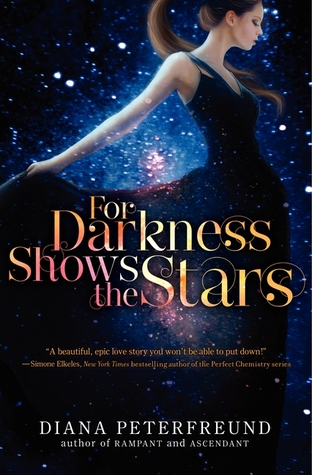
For Darkness Shows the Stars (For Darkness Shows the Stars #1)

  For my last challenge of 2013, I'm participating in the Classics Double Challenge hosted by One's Librarian Book Reviews. The object of this challenge is to read a classic (the term is used loosely to include fairy tales, mythologies, classics, any kind of original story) and couple it with a retelling (the original and the newer book have to relate in some way that you can define; it doesn't have to be a straight-forward retelling). My objective with this challenge is to read some classics that I've read yet.


Description (from Goodreads): It's been several generations since a genetic experiment gone wrong caused the Reduction, decimating humanity and giving rise to a Luddite nobility who outlawed most technology.
   Elliot North has always known her place in this world. Four years ago Elliot refused to run away with her childhood sweetheart, the servant Kai, choosing duty to her family's estate over love. Since then the world has changed: a new class of Post-Reductionists is jumpstarting the wheel of progress, and Elliot's estate is foundering, forcing her to rent land to the mysterious Cloud Fleet, a group of shipbuilders that includes renowned explorer Captain Malakai Wentforth--an almost unrecognizable Kai. And while Elliot wonders if this could be their second chance, Kai seems determined to show Elliot exactly what she gave up when she let him go.   But Elliot soon discovers her old friend carries a secret--one that could change their society . . . or bring it to its knees. And again, she's faced with a choice: cling to what she's been raised to believe, or cast her lot with the only boy she's ever loved, even if she's lost him forever.

Review: For Darkness Shows the Stars is a retelling that does everything right. Though it superficially maintains the plot points and themes of Jane Austen's Persuasion, it goes beyond and creates a new darker, post-apocalyptic world. Some readers were not thrilled by how Peterfreund dealt with rough handled morality in the story, but I would disagree. I think her decision to narrow her focus on the society enriched my pleasure of reading Austen's original work considerably. 
  The world that Peterfreund created is very intricate and detailed. While it takes some time for the world to unfold and one to grasp the social hierarchy, I was never confused but rather engrossed. Elliot North is our heroine who happens to be a Luddite, one of the elite destined to care for the mentally Reduced remnant after human genetic engineering went catastrophically wrong. 
  Eliot is just as charming as she is in the original book. She is duty bound to her family and her society, but the more she works with the Reduced, the more she has begun to question her duty; her family seems more interested in luxurious leisure than estate management. Her people will starve without recourse to forbidden technology, and more and more Post-Reduced children are being born. 
  One of the "Posts" that we get to know intimately is that of Kai Wentworth, Eliot's secret best friend turned romantic interest. Kai is extremely intelligent and longs to explore the world outside his designated boundaries. He and Eliot both know their romance is doomed due to their social status and the gap of his disappearance has wounded our heroine deeply. Now he has returned with the fleet of Post explorers who could be the last hope for saving Elliot's heritage, but his bitterness toward Elliot may be hiding a more dangerous secret. 
  I loved how the author gave insight to Eliot and Kai's relationship by interspersing letters written by their younger selves. You can see how naturally their relationship grew and evolved unlike the Austen original which underplayed the romance and reducing it to body language and signals. His passion rubs off on Eliot and we understand where their spark comes from. Though I already knew the outcome of the story, I couldn't help but feel frustrated whenever an obstacle came in Eliot and Kai's happily ever after, which I think is a sign that the author knows how to write a romance. 
While I liked that the society was different and original but still addressed the major themes of social and class distinctions, the book still felt a bit unfinished. I would have liked to see how the issues of slavery, anti-intellectualism and fundamentalist religion play out and hopefully it will be explored more when Peterfreund revisits the world in a different angle in her companion novel, Across a Star-Swept Sea, which will be released this fall. Readers looking for a swoony romance that isn't hindered by some depth, a steady pace, and a likable heroine should definitely check this book out. 

Rating: 4.5 stars

Words of Caution: There are rumors of possible sexual situations involving a character but it's never really explored or clarified. Recommended for strong Grade 7 readers and up.

If you like this book try:

Tuesday, May 7, 2013

Orleans

  I want to apologize for the sporadic posts on the blog in the last few days. The school year is wrapping up quickly with only a couple of weeks to go and I'm finding myself with less time. I did manage to sneak in a few reads, one of which is Sherri Smith's post-apocalyptic novel Orleans. My review of Orleans is based upon the advanced reader's copy I read provided by the publisher via Netgalley (Thank you!).

Description (from the Publisher): After a string of devastating hurricanes and a severe outbreak of Delta Fever, the Gulf Coast has been quarantined. Years later, residents of the Outer States are under the assumption that life in the Delta is all but extinct… but in reality, a new primitive society has been born.
   Fen de la Guerre is living with the O-Positive blood tribe in the Delta when they are ambushed. Left with her tribe leader’s newborn, Fen is determined to get the baby to a better life over the wall before her blood becomes tainted. Fen meets Daniel, a scientist from the Outer States who has snuck into the Delta illegally. Brought together by chance, kept together by danger, Fen and Daniel navigate the wasteland of Orleans. In the end, they are each other’s last hope for survival.

Review: I've been burnt out by the dystopian novels overload. Each story and its characters are seem to blur together if you read them one after the other. Needless to say that I was a bit worried and curious when I saw that Ms. Smith is switching gears from historical fiction (I absolutely loved her book, Flygirl, which I highly recommend) to the post-apocalyptic/science fiction genre. While I had no doubts of her writing ability, I was curious how the author was going to add something new to the current big trend of YA.
  Instead of imagining a new government gone wrong, Smith takes a real past event, the horrors of Hurricane Katrina, and magnifies it into a captivating and truly frightening future for the United States. In a series of doctrines and weather reports we learn that in Orleans, six devastating hurricanes follow Katrina's path right into the heart of the crippled Gulf Coast. On the heels of the storms came the quarantine of the entire Gulf Coast region because of Delta Fever in 2020 and the government's complete abandonment of the disease-ravaged sector a mere five years later. Now in 2056, Fen de la Guerre and others like her find themselves struggling to live in a primitive society. Due to the catastrophic epidemic, many are choosing to organize themselves into tribes by blood type (some are more valuable than others and therefore higher on the social ladder) to gain a modicum of control over the spread of Delta Fever.
 The plot begins when Fen's dear friend dies while giving birth and gives Fen the responsibility to try to get the newborn over the wall to the Outer States so she might have a better life. Meanwhile, a young scientist named Daniel sneaks across the border into Orleans to further his search for a cure for the fever. Fen and Daniel become strong, if unlikely, allies. The book is written in two perspectives but they do not switch every chapter. I found the point of views completely different. Fen's voice is immediate, first person and spoken in tenacity and admired her survival skills, reading from her point of view was a bit jarring because it is written in the dialect of the Orleans tribe. Daniel's perspective is written in third person and in perfect grammar. This is a deliberate move by the author and it is very effective in watching how Fen and Daniel grow as characters. Smith waits for her readers to develop their own preconceived notions about Fen and Daniel from their appearances and their actions as they join these characters on their harrowing journey. Slowly  their back stories are revealed with nicely timed flashbacks, which either confirmed, altered, or denied our opinions of these characters. I know that my own opinions of these two characters changed many times throughout the book, especially when it comes to identifying who is the victim.
   While the plot moves at a steady pace, it really picks up when Fen and Daniel meet and we get a hint about government conspiracy. Though there are some loose ends that remain, the richly textured world-building, the complicated relationship between Fen and Daniel, as well as the constant and varied dangers they face, will hold a lot of readers interest. The book is also rich with important, powerful, and current themes such as global warming, racism, political corruption, and the complexity of human nature which would make this book a good choice for a bookclub.

Rating: 3.5 stars

Words of Caution: There is an allusion to rape and disturbing images. Recommended for Grades 8 and up.

If you like this book try: The Ward by Jordana Frankel, Restoring Harmony by Joelle Anthony, or Article 5 by Kirsten Simmons

Tuesday, March 5, 2013

Legend (Legend #1)

   Once again I was swept away with high recommendations and hype over a book. In this case the book is Marie Lu's Legend. I know many people who really enjoyed or loved this book, but I thought the book was just okay and really didn't offer anything new or exciting since the last YA dystopian book published. 

Description (from Goodreads): What was once the western United States is now home to the Republic, a nation perpetually at war with its neighbors. Born into an elite family in one of the Republic’s wealthiest districts, fifteen-year-old June is a prodigy being groomed for success in the Republic’s highest military circles. Born into the slums, fifteen-year-old Day is the country’s most wanted criminal. But his motives may not be as malicious as they seem.
   From very different worlds, June and Day have no reason to cross paths—until the day June’s brother, Metias, is murdered and Day becomes the prime suspect. Caught in the ultimate game of cat and mouse, Day is in a race for his family’s survival, while June seeks to avenge Metias’s death. But in a shocking turn of events, the two uncover the truth of what has really brought them together, and the sinister lengths their country will go to keep its secrets.

Review: Legend is your usual concoction of YA dystopian tropes along with a dash of forbidden romance, some adventure and intrigue. Just avoid my big mistake in reading the inner panel of the book where the virtually the entire plot is written out and spoiled for you.
 Our heroine is named June, an exceptionally gifted prodigy who is being groomed to become a military star a la Ender in Enders Game by Orson Scott Card. When her brother is mysteriously and senselessly murdered, she embarks on a mission to find his killer. All signs point to one person, a boy named Day, a notrious criminal who is already wanted by the Republic. 
  While I thought both both June and Day were likable characters, I didn't really find anything that would set them apart from the other numerous YA dystopian characters that I've met. Sure, they had moments that made me smile and root for them, but ultimately I thought their cat and mouse chase as well as their insta-romance happened just a little too conveniently for me. I actually wanted to learn more about the big mystery behind why the government is so interested in Day's brother. While there are some great action scenes in the book and the pace moves rather quickly, I grew bored with the book since the plot was incredibly predictable. There is absolutely no fun in seeing where the plot goes where you already know what will happen before the characters do. Legend reads like a first book since there really aren't enough answers found and the world building is very weak.
  Though Legend is probably one of the better YA dystopians released and it does have its entertaining moments, I wanted something with a bit more depth and originality. Since I didn't feel compelled to see where these characters go in the story, I don't plan on continuing with the series. I would, however, recommend this series to readers who are looking for another series to tie them over to the film release of Catching Fire.


Rating: 3 stars

Words of Caution: There is some language and violence. Recommended for Grades 8 and up.

If you like this book try: Prodigy (Legend #2) by Marie Lu, Article 5 by Kristen Summons, Divergent by Veronica Roth, The Roar by Emma Clayton

Tuesday, February 26, 2013

The Lost Girl

  Sangu Mandanna's debut novel, The Lost Girl, is a provocative and page-turning thriller/romance that gets at the heart of what it means to be human. Using similar themes of Mary Shelly's Frankenstein, the story is wholly original and one that is not easy to forget.
Description (from the publisher):  Eva's life is not her own. She is a creation, an abomination—an echo. She was made by the Weavers as a copy of someone else, expected to replace a girl named Amarra, her "other," if she ever died. Eva spends every day studying that girl from far away, learning what Amarra does, what she eats, what it's like to kiss her boyfriend, Ray. So when Amarra is killed in a car crash, Eva should be ready. But sixteen years of studying never prepared her for this.
  Now she must abandon everything and everyone she's ever known—the guardians who raised her, the boy she's forbidden to love—to move to India and convince the world that Amarra is still alive. What Eva finds is a grief-stricken family; parents unsure how to handle this echo they thought they wanted; and Ray, who knew every detail, every contour of Amarra. And when Eva is unexpectedly dealt a fatal blow that will change her existence forever, she is forced to choose: Stay and live out her years as a copy or leave and risk it all for the freedom to be an original. To be Eva.

Review: Eva doesn't have a right to her own life. She is an echo, a carbon copy of a girl named Amarra who lives halfway across the world. Eva is created as a back-up plan for Amarra's parents in case Amarra dies. Eva mimics Amarra's life, she learns everything that Amarra learns and is even nearly forced to suffer the same physical injuries as her other. Though the concept of clones isn't breaking new ground, what makes The Lost Girl stand out is the exploration of the psychological aspect to Eva's character, since it's not just Eva's organs that are being harvested, but her entire entity and identity.
 The Lost Girl is a novel that sits uneasily along the genre lines of dystopia, science fiction, and speculative fiction. While it contains elements of each of these genres, the world of echoes and their creators called Weavers take on a somewhat mystical and mysterious manner. The book never really delves into how the world came to exist. Like some of Bradbury's stories, we are shown human beings who find themselves in extraordinary futuristic circumstances instead of a technology driven setting that drives humans. I know some readers may be disappointed in not knowing much about Weavers and the utterly creepy setting of the Loom, but this didn't bother me at all. I was thoroughly captivated by the characters of this story and it didn't deter me from enjoying the story. 
  Mandanna's writing is exceptional, thoughtful, and beautifully descriptive, deftly balancing seriousness and humor, just like her characters. Eva is a heroine that I loved from the start. She finds herself in a horrible circumstance, but makes the best of it without losing her dignity and constant persistence. Unlike many heroines that fill our pages with noble self-sacrifice, Eva refuses to give up her inalienable rights to have a life and a place in society regardless of how he kind is perceived. She is rightfully selfish, but also aware of the dangers she puts her loved ones while she goes an incredible journey. 
  Though the plot of The Lost Girl is a bit of a slow starter as it is divided into three sections. The first section introduces us Eva as Eva without any strings attached. In this section,  we see Eva as a reflection of our humanity. Her connection to her family, a collection of people who are not bound to her by blood but by their concern and love for her, and her guardian/best friend/love interest Sean are explored. Each of these members reflect a different aspect of Eva's personality. The pace of the book quickly picks up in the second and third part of the book, where we see Eva on display and acting out her duties as an echo. Our hearts ache with her struggle and we are horrified at all the hurdles she must jump and conquer. I completely admire Eva's tenacity, her drive, and in this very rare instance her impulsiveness to not stay quiet.
  I hadn't expected to enjoy The Lost Girl as much as I did because I've been on a dystopian burn-put lately where all the book seem the same. There are a few aspects that I wish were given more time to develop such as the settings of London and Bangalore as well as further development of some really intriguing secondary characters. The Lost Girl gave me much to think about while being cathartic. The characters and premise asks us unsettling questions, but ultimately it is a story about love, grief, death, and above all what makes us human. I'm very eager to see if Eva's story continues and what else Mandanna plans on writing.

Rating: 4.5 stars

Words of Caution: There are some disturbing scenes and a scene of underage drinking. Recommended for strong Grade 8 readers and up.

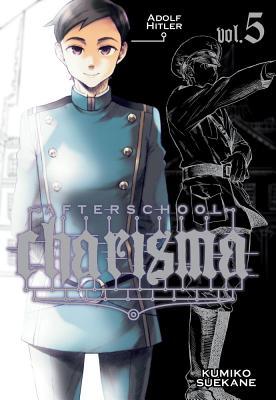
If you like this book try: Afterschool Charisma manga series by Kumiko Suekane, Unwind series by Neal Shusterman, The Adoration of Jenna Fox by Mary E. Pearson, Never Let Me Go by Kazuo Ishiguro, The Children of Men by P.D. James

Thursday, January 24, 2013

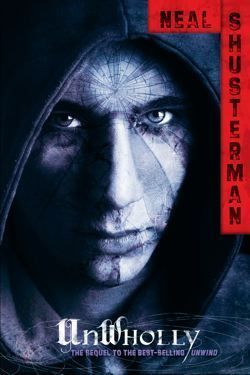
UnWholly (Unwind #2)

  I read Unwind by Neal Shusterman back in 2008. It was one of the most disturbing, thought provoking books that I've ever read. When I heard it was going to be series, I was simultaneously excited yet worried. My expectations for the sequel was very high and I left it unread for several days in fear that I would be greatly disappointed. After being reassured from fellow Unwind fans that I would enjoy it, I took the plunge and I wasn't disappointed.

Description (edited to avoid spoilers): In a future world where those between the ages of thirteen and eighteen can have their lives "unwound" and their body parts harvested for use by others, three teens go to extreme lengths to survive until they turn eighteen. The morality behind unwinding has finally been brought into question. It has now become big business, and there are powerful political and corporate interests that want to see it not only continue, but expand, allowing the unwinding of prisoners and the impoverished. In this chilling tale of survival, how far are you willing to go to save your own life?

Review: Please note that this review is intentionally vague in order to avoid spoilers for either of the books. In the Unwind series, our current war is in chaos. After a terrible war between the Pro-Life and the Pro-Choice, an amendment called "The Bill of Life" was added to the Constitution. The Bill of Life states that life of any child is protected from conception until the age of 13. Once a child reaches 13 a parent then has the right to unwind their child. Unwinding is a process where the child officially remains alive – but in a “divided state.” Every part of the body is harvested at a Harvest Camp and preserved and later used for people that need replacement parts. For example, if someone is suffering from heart failure – instead of having your traditional bypass surgery you just get a new, live heart that once belonged to a child that was Unwound. A parent or legal guardian can sign the unwinding order for any reason (i.e. they can't financially afford to support their child, don't like their child, etc) for their child until the child reaches 18. With this chilling and horrifying premise, Shusterman plays with all of our darkest fears such as death, abandonment, disappointment, and the fear of being unloved and challenges his readers to think of what lengths they would go to in order to save themselves in this gripping and brilliantly imagined thriller.
  While Unwind focuses on the individual, unwinding experiences of three teens, UnWholly provides its readers with a lot more historical context of how the Bill of Life came to be. Not only do we reconnect with the main cast of characters from the first book, we are also introduced to new characters, some of which you hate with a passion and others that evoke your sympathy yet make you feel uncomfortable with their presence. Each character is fully realized with their flaws and strengths drawn with equal strokes. The story is told through multiple perspectives, which done quite well. 
  UnWholly could have easily been your standard middle book, but thankfully Shusterman gives equal time to  character development and story arc without losing its intense action sequences and incredible pace in his short chapters. There were many times where I thought I knew where the story was headed, but the author threw a curve ball several times and left me unsure. I took a long time, by my standards, to finish UnWholly but that is not a reflection of the book's quality. For me the horror described both metaphorically and literally in the book seeped into my bones and I needed some distance after reading it which is why I read it sections. Still I had to force myself to close the book both in fear of the foreshadowing and ominous tones in the book. 
  If you are looking for an edge of your seat thriller that makes you think and are tired of all the hype of the next dystopian ala "Hunger Games" derivative, definitely pick up this series. This series is sure to get you out of a reading rut and has been proven effective to get reluctant readers motivated. To those I've recommended this book to, I've not heard one disappointment yet. The Unwind series will make you feel wide range of emotions from anger to horror, but it will also show you what it means to be alive. Though UnWholly doesn't end in a cliffhanger, I'm very, very excited and interested to see how the events in this book unfold.

Rating: 4.5 stars

Words of Caution: There is some language, strong violence, disturbing images, and mature themes. Recommended for Grades 10 and up.

If you like this book try: Hunger Games series by Suzanne Collins, Gone series by Michael Grant, Afterschool Charisma series by Kumiko Suekane, Maze Runner series by James Dashner, Escape from Furnace series by Alexander Gordon Smith

Monday, January 14, 2013

Manga Mondays: Afterschool Charisma Vol. 6

  Manga Mondays is a meme hosted by Alison at Alison Can Read where bloggers can share their passion for reading mangas. It's a great place to get new manga titles to try and to meet new bloggers. Afterschool Charisma manga series a great science fiction read that has an interesting story line and probes the reader to question everything that he or she has learned.

Description: Kai, the terrorist and leader of the clone rebellion, continues his story of the past and paints a bleak potential future for the clones if they don't spring into action. Meanwhile Shiro is in an odd position. He had always thought of himself as an original, but now he learns startling facts about himself: he is just like any othe clone. Now he wonders what his role in the St. Kelio's Academy really is.

Review:  Afterschool Charisma continues to be a manga series that focuses on the deeper philosophical questions rather than an action packed plot. In the sixth volume, the characters puzzle over the age old question, "Who are we?" and "What are we suppose to do with our lives?" Though we are given more details about the history of the elite academy, I'm still unsure of what percent is truth and propaganda. The militant Kia does paint a convincing picture of clones simply decaying and "reprogrammed" if they don't follow the same footsteps of the past. Like the last volume in which we are given two versions of clone Hitler as an example to illustrate his point, this volume gives us Elizabeth (Elizabeth the Virgin Queen). The first Elizabeth clone is obsessed with learning from books. She is secluded in a room and driven to insanity, claiming she still not educated enough. The second Elizabeth clone is depressed from not being chosen by a buyer. Unwanted and driven by curiosity of what lies beyond the gates of the Academy, she plans an escape and fails.
  I am enjoying the way this manga is told. We have been setup to believe one thing and find out that it is a lie. Shiro is in the works to be another Kai, a clone guardian. He has been led to believe that he is an original human and his only friends are the clones so he naturally bonds with them. Will he also take part in the clone rebellion? Will his opinion of the clones and himself now change? I guess I'll have to wait for volume 7 to see what happens next.

Rating: 4 stars

Words of Caution: There are mature themes and brief moments of strong violence, and some language. Recommended for older teens and adults only.

If you like this book try: Afterschool Charisma Vol. 7 by Unwind by Neal Shusterman, Hetalia: Axis Powers by 

Monday, January 7, 2013

Manga Monday: Afterschool Charisma Vol. 5

  Manga Mondays is a meme hosted by Alison at Alison Can Read where bloggers can share their passion for reading mangas. It's a great place to get new manga titles to try and to meet new bloggers. The last volume of Afterschool Charisma left me with a cliffhanger of sorts. A huge event happened and ended in the fourth volume with a promise of an explanation in volume five. My problem? Volume five was constantly checked out since last May and by that time volume six was also published. So, I guess it's a mixed bag that since I got a  hold of both volumes and read them. Unlike the Nana manga series that is filled with drama with a capital "D", the Afterschool Charisma manga series gives me a brain cramp filled constant flurries of "What if?"s floating in  my head as I turn the pages.

Description: In the aftermath of the disastrous school expo at St. Kleio Academy, an exclusive school of famous historical clones, where some of the clones were killed (most noteably Joan of Arc who was burned the stake), a returning clone known only as “Kai” who bears a disturbing resemblance to Shirou tells a story about the previous generation of clones and what could have turned him and others into “terrorists” working against the school.

Review: I really wished the publishers and the authors would work harder in recapping the story thus far before continuing the story arc. It's a good thing that I reviewed my older review posts as well as checked out some other reviewers before diving into this latest volume. Volume 5 promised some answers, but like the nature of this entire manga series it provides more questions than answers.
  Volume 5 centers around the main questions of why clones, regardless if they are famous historical figures, are made? What is the purpose of St. Kleio Academy? Are the lives of clones entitled to make their own mark or are they predestined to follow their footsteps of their predecessor?
  The mysterious "Kai", who is an ordinary person that was cloned, is our peek inside St. Kleio Academy. Though set up like a school, the academy is a breeding farm that herds clones like cattle and sell them off to auctions. The clones are forced to follow their predecessor's footsteps (i.e. have the same accomplishments, skills, and even behavior/personality). If the clone is seen to be out of place, they are aborted and created anew. Kai is an interesting character, who makes you feel torn between feeling sorry for him and making you wonder what plans he has up his sleeves. As the main figure who catalyzed the clone rebellion (or is the rebellion just for the amusement of the Academy director?), he provides information to the current class of clones. Now whether this information is true or just another form of propaganda, that yet to be determined.
  In addition to Kai, we are given different scenarios of what clones can accomplish in this volume. The most striking clone for me in this series has been the young Hitler. Like his care-free personality, his youthful and innocent physical appears is very striking. There are two clone Hitlers explored. The first Hitler is a very talented young artist who has no political ambitions whatsoever. Once discovered this clone suddenly disappears and a new Hitler clone appears. The second Hitler clone is aware and appalled by his original's actions. He gives his whole life up to a religious institution and atones for his original's sins and dies a noble death. With these two versions of what could have been, we can't help but wonder if the old saying "history will repeat itself?" rings true.
  I really enjoy how the moral ambiguities of cloning as it lends itself to discussion and it's really what draws me to this series. I really want to know about what society needs these clones of historical figures for that they are producing them and auctioning them off like a meat market. What societal pressure is causing this? What exactly are they expected to do out there?

Rating: 4 stars

Words of Caution: There is some crude sexual humor, a brief scene of nudity, and violence. Recommended for older teens and adults only.

If you like this book then try: Afterschool Charisma Vol. 6 by Unwind by Neal Shusterman, Hetalia: Axis Powers by 

Friday, January 4, 2013

What's Left of Me (Hybrid Trilogy #1)

   I have been really curious about Kat Zhang's debut novel, What's Left of Me, when I saw several bloggers post about this book for their Waiting on Wednesday meme hosted by Jill at Breaking the Spine. With some many dystopians feeling like derivatives of the Hunger Games series, I had hoped this book would be much more unique and for the most part it delivers. 

Description (from the publisher): Eva and Addie started out the same way as everyone else-- two souls woven together in one body, taking turns controlling their movements as they learned how to walk, how to sing, how to dance. But as they grew, so did the worried whispers. Why aren't they settling? Why isn't one of them fading? The doctors ran tests, the neighbors shied away, and their parents begged for more time. Finally Addie was pronounced healthy and Eva was declared gone. Except, she wasn't. For the past three years, Eva has clung to the remnants of her life. Only Addie knows she's still there, trapped inside their body. Then one day, they discover there may be a way for Eva to move again. The risks are unimaginable-- hybrids are considered a threat to society, so if they are caught, Addie and Eva will be locked away with the others. And yet-- for a chance to smile, to twirl, to speak, Eva will do anything.

Review: Everyone is born as a hybrid: two souls occupying one body. Only, in futuristic America, it's illegal to remain a hybrid. The dominant soul is supposed to take over, and the recessive, weaker one, is supposed to disappear, usually by the time the child is six. Even though Addie was the stronger soul, Eva held on. Despite the fact that she could no longer move or speak to anyone but Addie, Eva didn't go away and is very much present. Now that they are teens, Addie and Eva have adopted rules of behavior in order to survive: don't stand out, don't be exceptional, blend in at all costs that is until the girls become friends with Hally and her brother, Devon, who are also undercover hybrids. The siblings are able to show the sisters that Eva can reemerge and have her freedom, but it will be costly. Eva's freedom comes at high price: imprisonment in a hospital that wants to "cure" kids of being hybrids and where patients who "go home" are never heard from again.
  What's Left of Me is a uniquely imagined dystopian novel that has lots of potentials and for the most part doesn't fall short in the execution. Zhang's prose is lovely, and the plot moves at a steady pace as the sisters being to realize the troubles they find themselves into at the hospital. I liked how the dystopian America that Zhang has created touches upon important topics and controversies that we are currently facing today such as xenophobia, identity, ethics, and choice. We don't know much about the America that Addie and Eva live in besides the fact that hybrids have been forbidden for decades and "settling"-allowing the dominant soul to assert itself- is mandatory. The mystery about why their society is so desperate to "fix" hybrids is what compelled me to continue reading. An abundance of questions remain, even after Zhang's well-orchestrated nail-biter of an ending which thankfully isn't a cliffhanger. 
 Although I liked the characters and enjoyed the unique premise, the reason why I gave this book three and half stars instead of four is that I wanted all the hybrids to have a very strong, individual personality so I could tell the two sisters apart without having the characters constantly identifying themselves. Though the book is narrated by Eva, I found the exchange between her and her sister and their personalities to be very subtle. There is also a budding romance which I wished was developed a little bit more, but I think that will change in the next installment of the series. It is easy to place What's Left of Me with other dystopians novels that are now released, but I think the premise will grab many readers. I do plan on continuing this series.

Rating: 3.5 stars

Words of Caution: There are few disturbing images. Recommended for Grades 7 and up.

If you like this book try: The Host by Stephenie Meyer, Uglies series by Scott Westerfeld, Delirium by Lauren Oliver, One Flew Over the Cuckoo's Nest by Ken Kelsey

Friday, December 7, 2012

There Comes a Prophet

   Imagine a world where the age of discovery has been ruled as a deafening darkness and the very notion of dreaming is looked down upon. In the Temple City people have come to believe that the Vicar's who rule and teach them have the final say. Although some express their discontent in minor ways, most choose to exist under their rule and except their way without question. What happens when you break the chains of your confining society? Can you live a life without crippling fear and progression of any kind? These are the core questions asked in David Litwack's highly readable dystopian fantasy book called There Comes a Prophet.

Description (from Goodreads): Who among us will cast aside a comfortable existence and risk death to follow a dream?  A world kept peaceful for a thousand years by the magic of the ruling vicars. But a threat lurks from a violent past. Wizards from the darkness have hidden their sorcery in a place called the keep and left a trail of clues that have never been solved.
   Nathaniel has grown up longing for more but unwilling to challenge the vicars. Until his friend Thomas is taken for a teaching, the mysterious coming-of-age ritual. Thomas returns but with his dreams ripped away. When Orah is taken next, Nathaniel tries to rescue her and ends up in the prisons of Temple City. There he meets the first keeper of the ancient clues. But when he seeks the keep, what he finds is not magic at all.

Review:  There Comes a Prophet introduces us to a world the potential to become good or evil is constantly hung in the balance. Fear of ruin, danger, and the unknown, is what keeps the citizens of Temple City in line and safe. Some blindly follow the rules ingrained in them by the Vicars, the rulers of the society.   Technology and other similar advancements are forbidden and the very idea of dreaming of a different future other than the status quo is dangerous and unthinkable.
 The plot revolves around three friends, all young adults, coming of age and trying to weave and understand why their society keeps its citizens from reaching their full potential. I thought the main characters were likable and I willingly joined them on their journey filled with riddles to find out the truth about the past, to inspire others from learning from their mistakes, and to regain control of their lives without living in fear. Due to the book's third person narration, however, I was unable to get closer to the characters than I would have liked. I did, however, appreciate that each character's personality stood out on their own and that they weren't clearly defined as good/bad as each had their own personal motive driving their actions. I just wished the author delved a little deeper into the complexity of the world and the character's personality. Although I liked the characters, I didn't think they were memorable. 
  While there is no violence or epic battle scenes in the book, I appreciated reading about a rebellion that was relatively blood-free and peaceful. The book lacked any sense of urgency or danger which made the progress of our main characters a bit unbelievable and unsatisfying. Brief descriptions of psychological torture used by some members of the Temple were alarming, but the tension soon fizzled out once the job was done. I was surprised on how many people knew about what this technique and did nothing about it. I would have liked the adults to stand up against the corrupt, ruling organization rather than enabling it, but that's a common trope featured in many YA dystopian novels.  
    Some readers may be a bit concerned about the religious overtones in the book, but the author doesn't specifically pick one religion. It uses the idea of a religious institution keeping the people under control while reaping the benefits of technology, which is found in many other dystopian reads. It did take me a while to figure out what it meant to be in the 'light' and 'darkness' but it soon clicked after a few chapters. 
  There Comes a Prophet is a solid read and engaging read that held my interest throughout. The book's themes could easily generate lots of interesting discussions had the author allowed the plot and characters to become a bit more darker and complex. I would recommend this book to readers who like the dystopian or fantasy genre, but want a story a bit more hopeful than gritty and realistic.
Rating: 3 stars

Words of Caution: While there is no physical violence in the book, the children do undergo a form of psychological torture as part of their conditioning. Recommended for strong Grades 5 readers and up.

If you like this book try: City of Ember series by Jeanne DuPrau, Giver by Lois Lowry

Thursday, November 29, 2012

The Age of Miracles

    I seem to be very luck with most of my adult reading picks this year. The latest book that struck a strong chord with me is Karen Thompson Walker's debut novel, The Age of Miracles, that makes us wonder what we would do if we are confronted with a natural disaster and whether life we knew it would irrevocably change.

Description: On a seemingly ordinary Saturday in a California suburb, Julia and her family awake to discover, along with the rest of the world, that the rotation of the earth has suddenly begun to slow. The days and nights grow longer and longer, gravity is affected, the environment is thrown into disarray. Yet as she struggles to navigate an ever-shifting landscape, Julia is also coping with the normal disasters of everyday life.

Review: The Age of Miracles is a gripping yet quiet debut novel. Our narrator is the precocious eleven year-old Julia who wakes one day to the news that the earth's rotation has started slowing. The unheard event sends ripples of bewilderment, fear, paranoia, and chaos everywhere. The immediate effects of the slowing is startling as people rush to the nearest grocery stories and survival disasters kits, which is not common with what people really did with the potential threat of Y2K twelve years ago.
  "The slowing" is growing slower still, and soon both day and night are more than twice as long as they once were. The simple concept of what we think time is suddenly altered causing fractions within the nation as the federal governments decide to stick to the 24-hour schedule (ignoring circadian rhythms) while a subversive movement called "real-timers" erupts and disregards the clock and appear to be weathering the slowing better than clock-timers-at first. As the days continue to lengthen, gravity increases, the earth’s magnetic field begins to collapse and the world faces potential famine as plants die during the ever-lengthening nights. The slowing is never explained nor addressed beyond its after effects, much to the frustration of many readers, but I had no issues with it as I saw the event as a series of metaphors ranging from the classic coming of age to the loss of the innocence all thanks to the wonderful narrator.
  I loved Julia right from the start. Her voice is memorable, authentic, direct, and conversational. I connected with her on so many levels. On the brink of adolescence, she's as concerned with buying her first bra as with the world falling around her. She keenly observes her parent's failing marriage and also has a bittersweet first romance of her own. She tries to survive the mercurial waters of junior high where her peers are tweens acting as if they are in their mid-20s and attached to their cliques. Though she attempts to fit in, she still wants a companion who can understand her and be comfortable in her own skin. She wants to take risks but at the same time is afraid to leave her familiar world.
 While the slowing causes irreversible damages, the narrative remains focused on the horrifying day-to-day and the personal decisions that persist even though no one knows what to do. The book suggests that perhaps we are worrying about the wrong set of problems that will bring our end. An exquisitely written, poignant read, The Age of Miracles is easily a book that can be enjoyed by teens and adults alike. I would not be surprised to see it on this year's Alex Awards.

Rating: 4.5 stars

Words of Caution: There is some language and underage drinking. Recommended for Grades 9 and up.

If you like this book try: Life As We Knew It by Susan Beth Pffeffer, Year of Wonders by Geraldine Brooks, The Lovely Bones by Alice Sebold, Extremely Loud and Incredibly Close by  Jonathan Safran Foer
Tuesday, November 6, 2012

Stormdancer (The Lotus Wars #1)

 Stormdancer, the first book in the Lotus War series and Jay Kristoff's debut novel, has garnered many starred reviews from review journals. The reaction from readers has been all over the spectrum from the worst book to the favorite book read in 2012. For me, Stormdancer falls somewhere in the middle of those polar opposites.

Description (from the publisher): A DYING LAND
The Shima Imperium verges on the brink of environmental collapse; an island nation once rich in tradition and myth, now decimated by clockwork industrialization and the machine-worshipers of the Lotus Guild. The skies are red as blood, the land is choked with toxic pollution, and the great spirit animals that once roamed its wilds have departed forever.

AN IMPOSSIBLE QUEST
The hunters of Shima's imperial court are charged by their Shōgun to capture a thunder tiger – a legendary creature, half-eagle, half-tiger. But any fool knows the beasts have been extinct for more than a century, and the price of failing the Shōgun is death.

A HIDDEN GIFT
Yukiko is a child of the Fox clan, possessed of a talent that if discovered, would see her executed by the Lotus Guild. Accompanying her father on the Shōgun's hunt, she finds herself stranded: a young woman alone in Shima's last wilderness, with only a furious, crippled thunder tiger for company. Even though she can hear his thoughts, even though she saved his life, all she knows for certain is he'd rather see her dead than help her.

But together, the pair will form an indomitable friendship, and rise to challenge the might of an empire.

Review: I really wanted to love Stormdancer. It had everything that I was looking for in a great read: a fantastic world, a wholly original story, and a strong female protagonist who I could root for throughout the book. Unfortunately, it took a lot of patience and setting the book aside, forgetting about it and then picking it up to actually find the compelling aspects of the story.
  Stormdancer is a laborious read. The first half of the book is seeped in fantastic world building. Shima Imperium is a kingdom inspired by feudal Japan. It is a unique society woven from Japanese culture and history along with the author's imagination of steampunk machinery. Living standards are rough. Pollution and drug addiction, both of which runs the empire, proliferate under the rule of a corrupt shogun who seeks to win an admittedly nebulous war. I loved the world building in Stormdancer up to a certain point. Everything is described in minute detail from the story's setting to the clothes that people wear to the types of weapons warriors carry, which slows down the story's pace to a mere crawl. I had to bookmark the glossary, found in the back of the book and a hint that was pointed out to me by some friends, so I could figure out what words, deities, etc meant as there is hardly any context given to them in the text. Many times I would find Japanese words that are used frequently in the story but are never defined. I also found some words that aren't Japanese at all, which I had to look up. I wish the glossary was thoroughly created so it could help alleviate my frustrations with the book. For the most part, I think my experiences reading manga kind of helped build a vague foundation of Shima Imperium, but I still had to wrap my head around the world. The story is told mainly through third person narrative and finally picks up the slow pace when it turns its attention on the various characters in the story.
  Our protagonist, Yukiko is a strong willed teen forced to take care of her father at a tender age of 16. Yukiko has an antagonistic relationship with her father, a once revered warrior who now spends his time in a drug induced state in order to forget the horrors of his past. Through small glimpses of flashbacks, we are lead to believe that her father is the person responsible of driving her mother and brother away. We instantly feel Yukiko's isolation and anger. We become protective of her, but her survival and perceptive skills assure us that she can do fine on her own. Though she is aware of the flaws of her society, she isn't sure of the corruption's inception and extent nor does she know what her life is outside of keeping a watchful eye on her father. She is gifted (or cursed?) with an ability which the shogun's guild would punish with death if it is discovered: She can commune with animals. Her courage, fears, and skills are put to test when the Emperor commissions Yukiko's father and his crew to catch an elusive arashitora, a creature part-eagle and part-tiger. Yukiko's quest to survive becomes more challenging. Failure to find the arashitora means the end for Yukiko and her father. Indeed, death looms around every corner as Yukiko meets defectors, rebels and others too scared to oppose the shogun. After discovering startling truths about her family, she quickly becomes the face of rebellion.
  While Yukiko is a fabulous character whom I would love to know more, her character growth isn't smooth. It starts and stops when additional world building weeds itself in between. There were many times when I had to skim over the descriptions in order to keep my momentum going. I loved the moments where Yukiko and the arashitora form a special bond that grows at a realistic pace. Important themes central to the characters' motivations and key character relationships are surprisingly summed up in just few sentences, which left me completely unsatisfied. The book ends just when I found myself getting comfortable with the story.
  By the time I was finished with the book, I felt like I completed an arduous task, however, I didn't feel the satisfactions of completing it. While there is no dangerous cliffhangers lingering, there are plenty of unanswered questions.  I'm still conflicted about recommending this book and I'm not sure if I'll be continuing the series, especially if the dense and overwhelming world building continues. Stormdancer perhaps is one of those few books that might work better on film or even a graphic novel as its  visuals are incredibly important to the story. It's just too bad that the great characters have to take a back seat. 

Rating: 3.5 stars

Words of Caution: There is some strong language, allusion to a few sex scenes, and strong violence. Recommended for strong Grade 9 and up.

If you like this book try: Leviathan trilogy by Scott Westerfeld, Hungry City Chronicles by Philip Reeve, Eon by Alison Goodman, Silver Phoenix by Cindy Pon