Pages

Showing posts with label Writing. Show all posts

Tuesday, July 23, 2013

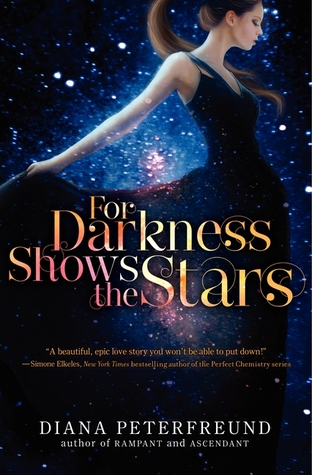
For Darkness Shows the Stars (For Darkness Shows the Stars #1)

  For my last challenge of 2013, I'm participating in the Classics Double Challenge hosted by One's Librarian Book Reviews. The object of this challenge is to read a classic (the term is used loosely to include fairy tales, mythologies, classics, any kind of original story) and couple it with a retelling (the original and the newer book have to relate in some way that you can define; it doesn't have to be a straight-forward retelling). My objective with this challenge is to read some classics that I've read yet.


Description (from Goodreads): It's been several generations since a genetic experiment gone wrong caused the Reduction, decimating humanity and giving rise to a Luddite nobility who outlawed most technology.
   Elliot North has always known her place in this world. Four years ago Elliot refused to run away with her childhood sweetheart, the servant Kai, choosing duty to her family's estate over love. Since then the world has changed: a new class of Post-Reductionists is jumpstarting the wheel of progress, and Elliot's estate is foundering, forcing her to rent land to the mysterious Cloud Fleet, a group of shipbuilders that includes renowned explorer Captain Malakai Wentforth--an almost unrecognizable Kai. And while Elliot wonders if this could be their second chance, Kai seems determined to show Elliot exactly what she gave up when she let him go.   But Elliot soon discovers her old friend carries a secret--one that could change their society . . . or bring it to its knees. And again, she's faced with a choice: cling to what she's been raised to believe, or cast her lot with the only boy she's ever loved, even if she's lost him forever.

Review: For Darkness Shows the Stars is a retelling that does everything right. Though it superficially maintains the plot points and themes of Jane Austen's Persuasion, it goes beyond and creates a new darker, post-apocalyptic world. Some readers were not thrilled by how Peterfreund dealt with rough handled morality in the story, but I would disagree. I think her decision to narrow her focus on the society enriched my pleasure of reading Austen's original work considerably. 
  The world that Peterfreund created is very intricate and detailed. While it takes some time for the world to unfold and one to grasp the social hierarchy, I was never confused but rather engrossed. Elliot North is our heroine who happens to be a Luddite, one of the elite destined to care for the mentally Reduced remnant after human genetic engineering went catastrophically wrong. 
  Eliot is just as charming as she is in the original book. She is duty bound to her family and her society, but the more she works with the Reduced, the more she has begun to question her duty; her family seems more interested in luxurious leisure than estate management. Her people will starve without recourse to forbidden technology, and more and more Post-Reduced children are being born. 
  One of the "Posts" that we get to know intimately is that of Kai Wentworth, Eliot's secret best friend turned romantic interest. Kai is extremely intelligent and longs to explore the world outside his designated boundaries. He and Eliot both know their romance is doomed due to their social status and the gap of his disappearance has wounded our heroine deeply. Now he has returned with the fleet of Post explorers who could be the last hope for saving Elliot's heritage, but his bitterness toward Elliot may be hiding a more dangerous secret. 
  I loved how the author gave insight to Eliot and Kai's relationship by interspersing letters written by their younger selves. You can see how naturally their relationship grew and evolved unlike the Austen original which underplayed the romance and reducing it to body language and signals. His passion rubs off on Eliot and we understand where their spark comes from. Though I already knew the outcome of the story, I couldn't help but feel frustrated whenever an obstacle came in Eliot and Kai's happily ever after, which I think is a sign that the author knows how to write a romance. 
While I liked that the society was different and original but still addressed the major themes of social and class distinctions, the book still felt a bit unfinished. I would have liked to see how the issues of slavery, anti-intellectualism and fundamentalist religion play out and hopefully it will be explored more when Peterfreund revisits the world in a different angle in her companion novel, Across a Star-Swept Sea, which will be released this fall. Readers looking for a swoony romance that isn't hindered by some depth, a steady pace, and a likable heroine should definitely check this book out. 

Rating: 4.5 stars

Words of Caution: There are rumors of possible sexual situations involving a character but it's never really explored or clarified. Recommended for strong Grade 7 readers and up.

If you like this book try:

Thursday, May 23, 2013

Chat with YA authors Elizabeth Norris and Brodi Ashton Tonight on Figment @ 7:00 p.m. ET!


Hi, Everyone! While I try to swim the rough waters of the end of the school year, I have a terrific opportunity for aspiring writers and fans of YA fiction alike to chat with some awesome authors! Figment, the online writing community, has a great author/editor web chat tonight, May 23rd at 7 pm EST. Come and chat with YA authors Elizabeth Norris (Unraveling and Unbreakable) and Brodi Ashton (Everneath and Everbound), plus Balzer + Bray editor Kristen Rens, will be taking questions about life as a published author.  I hope to see you at the live event!

Thursday, April 25, 2013

Cloud Atlas

  Two months ago my book club decided to read Cloud Atlas by David Mitchell. I have to say that I was a bit excited because the movie looked pretty cool and different. Unfortunately for me, Cloud Atlas was a very painful and fruitless read. It's probably the worst book I've read this year.

Description: A reluctant voyager crossing the Pacific in 1850; a disinherited composer blagging a precarious livelihood in between-the-wars Belgium; a high-minded journalist in Governor Reagan’s California; a vanity publisher fleeing his gangland creditors; a genetically modified “dinery server” on death-row; and Zachry, a young Pacific Islander witnessing the nightfall of science and civilisation—the narrators of Cloud Atlas hear each other’s echoes down the corridor of history, and their destinies are changed in ways great and small.

Review: Cloud Atlas is a book that is better to admire from afar for its structure rather than it's actual contents. Mitchell experiments and challenges the linear plot arc which most of us are familiar with as readers. Instead of one overall narrative that features many different characters and culminates into one conclusion, Mitchell offers us with six stories in different genres that recounts the "connected" stories of people from the past and the distant future, from a nineteenth-century notary and an investigative journalist in the 1970s to a young man who searches for meaning in a post-apocalyptic world. The stories begin and stop in what seems to be its climax and intersects, sometimes even in mid-sentence, with the next one. So essentially you are climbing up and reading stories 1, 2, 3, 4, 5, 6 and then climb down to conclude stories 6, 5, 4, 3, 2, and lastly 1. Confused? You're definitely not the only one.
  You're probably wondering why I put quotation marks on the word connected up above, aren't you? Well, that's because the stories don't really connect in a substantial and meaningful way. I read the book in not the way you're suppose to- I actually would start and finish one story before continuing to the next. I wanted to see how each story builds up to this great epiphany people claim it to be. Well, after suffering through 500 pages, there is no such grand revelation. The stories don't really connect. It all comes across as coincidence- the musician from the second story by chance picks up a diary that begins the book, a journalist enters a music store and buys a record of the music from the musician from story 2. As a reader, I think Mitchell was more concerned with showing how he can imitate great writers of literature than actually caring for the stories and the characters. This lack of attentiveness is what really bothered me about this book along with its super dense writing- writing so dense that I had to drink more caffeine to stay awake and then finally taking an aspirin or two for my headache when I finished it.
  So is Cloud Atlas worth the read? Probably not, but you can always claim that you've read it like many people do with other classics like Ulysses by James Joyce.  

Rating: 1 star

Words of Caution: Disturbing images, strong language including racial slurs, and sexual situations. Recommended for mature teens and adults only.

If you like this book try: Ghostwritten by David Mitchell, A Wild Sleep Chase by by Haruki Murakami,
The Wind-up Bird Chronicle by Haruki Murakami

Thursday, March 28, 2013

Blog Tour: Things I Can't Forget by Miranda Kenneally

   I'm absolutely delighted to participate in a blog tour for Miranda Kenneally's latest release, Things I Can't Forget. Many thanks to Sourcebooks for allowing me to part of this blog tour and to read an advanced reader's copy of the book via Netgalley. Be sure to stop by tomorrow for my review of the book! Below is a guest post by Miranda on what inspired her to write Things I Can't Forget

“Why Different Beliefs and Values Fascinate Me”

When I was sixteen, one of my closest friends got pregnant. At the time, I certainly hadn’t agreed with her decision to have sex, especially with a guy who wasn’t her boyfriend, but she was still my friend, so I wanted to stick by her. A lot of kids at my school ridiculed her and made fun of her, especially guys. I remember being shocked that one boy was particularly hurtful to her, and I couldn’t understand it because I knew he was trying to convince another friend of mine to have sex. The whole situation was crazy, especially when other kids started teasing me for being friends with a girl who was pregnant.

Still, I knew I had to stand by her, so I spoke to a woman at my church and we found a special home my friend could go away to so she could have the baby, put it up for adoption, and stay in school. My friend ended up never coming back to my high school.

I was proud of the decision I had made, to help my friend and stay by her. A couple years later, when I was 18 and still in high school, the same friend got pregnant again. This time by a different guy. And this time, she wanted to have an abortion. Her parents refused to help her, so my friend turned to me again. She didn’t need money, but she needed someone to drive her to the abortion clinic and bring her home after.

I was so pissed at her. I knew her parents wouldn’t let her go on birth control (!!!), but I’d told her to buy condoms. Still, this was a friend who had stuck by me through high school and had been my friend even when she was much more popular and prettier than me, but ultimately I decided I couldn’t help her. It wasn’t that I was against abortion – honestly, I’d never much thought about it, but I worried what other people would say if they found out I helped her get an abortion. My parents would be pissed. Kids at school would tease me again, just like when my friend got pregnant the first time. My church would be totally upset.

I had no thoughts of my own.

My friend found someone else to help her. She paid some random man to drive her there and back, which was totally unsafe. Our friendship kind of dissolved after that, but I often still think about what happened.

What if I had helped my friend? To this day, I don’t know if I made the right decision or not. At the time, it was a decision made based mostly on other people’s beliefs, not my own. Today, I probably would do whatever a friend asked of me, regardless of what I believe. It’s not my decision to make.

Things I Can't Forget, my third book, is about a girl named Kate, a devout Christian, who makes a decision to help her friend get an abortion, and afterwards she has to deal with the guilt and the resulting fall-out of their friendship. This book isn’t autobiographical at all – I was never as devout as Kate, but I feel this book gave me the opportunity to explore the guilt and to show that “your truth isn’t necessarily everyone else’s truth.”

I know that a lot of readers were shocked when I decided to include religion in my books Stealing Parker  and Things I Can't Forget (this will be my final book that explores religion), but religion is a big part of people’s lives here in America. The last census said that 78% of Americans claim they are Protestant. I wouldn’t call myself a Christian – I haven’t been to church in 12 years, but I still often think about what I believe, and I want teenagers and readers of all ages to know they can believe whatever they want to believe, regardless of what their parents and friends say. You need to make your own decisions.

Things I Can't Forget also aims to show that you can be friends with people who don’t necessarily believe what you believe, whether it’s about your idea of heaven, or Coke vs. Pepsi, or Mets vs. Yankees. This book is all about a willingness to be open.

If I could go back in time to my 18-year-old self, I wouldn’t tell myself whether or not I should help my friend get an abortion. I’d tell myself to do what I know in my heart to be right.

 Thank you for sharing, Miranda! Things I Can't Forget is such a thought provoking journey of self discovery. I thoroughly enjoyed it and I really hope you all check it out! Things I Can't Forget will be published on April 1st, 2013 by Sourcebooks. 

 
Kate has always been the good girl. Too good, according to some people at school—although they have no idea the guilty secret she carries. But this summer, everything is different…

This summer she’s a counselor at Cumberland Creek summer camp, and she wants to put the past behind her. This summer Matt is back as a counselor too. He’s the first guy she ever kissed, and he’s gone from a geeky songwriter who loved The Hardy Boys to a buff lifeguard who loves to flirt--with her.

Kate used to think the world was black and white, right and wrong. Turns out, life isn’t that easy…
 

Tuesday, December 25, 2012

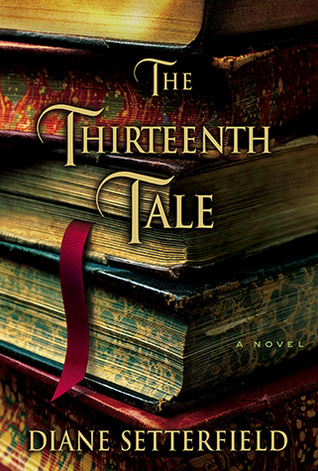
The Thirteenth Tale

  Happy Holidays, readers! I hope you are enjoying the holidays with friends and family. In these last few days of December, I'm trying to wrap up some of my remaining reading challenges. I'm almost half way done! The Thirteenth Tale wraps up my Alex Award reading challenge this year.

Description: Margaret Lea works in her father's antiquarian bookshop where her fascination for the biographies of the long-dead has led her to write them herself. She gets a letter from one of the most famous authors of the day, the mysterious Vida Winter, whose popularity as a writer has been in no way diminished by her reclusiveness. Until now, Vida has toyed with journalists who interview her, creating outlandish life histories for herself - all of them invention. Now she is old and ailing, and at last she wants to tell the truth about her extraordinary life. Her letter to Margaret is a summons.Somewhat anxiously, the equally reclusive Margaret travels to Yorkshire to meet her subject - and Vida starts to tell her tale. It is one of Gothic strangeness featuring the March family; her mother, the beautiful and willful Isabelle, who had a powerful hold on her father and brother, and the feral twins Adeline and Emmeline.Margaret, herself a twin, is doubly intrigued. But as a biographer she deals in fact not fiction, and she doesn't entirely trust Vida's account. She goes to check up on the family, visit their old home and piece together the story in her own way. What she discovers on her journey to the truth is for Margaret a chilling experience that will transform her life.

Review:  The Thirteenth Tale pays homage to the great Gothic writers, particularly Charlotte Bronte and Daphne Du Maurier, while weaving a wholly original story of its own. The story at first seems very familiar as a plain girl gets wrapped up in a dark, haunted ruin of a house, which guards family secrets that are not hers and that she must discover at her peril. Along this bleak journey, she also learns secrets about her own family.
  Margaret Lea is a London bookseller's daughter and a bibliophile. An introvert, she has lived vicariously through the written world. Her world revolves around what knows through her books. Books are her solace, friends, and adventures she can safely go on without any dangers. She enjoys books where the truth is written out in black and white terms and where the unjust are punished in the end. She also has an interest in siblings and has written an obscure biography that suggests deep understanding of siblings.
  It is Margaret's fascination with siblings that attracts the attention of the famous and now aging author Vida Winter, who finally wishes to tell her own, long-hidden, life story. Facing imminent death and feeling an unexplainable connection to Margaret, Miss Winter begins to spin a haunting, suspenseful tale of an old English estate, a devastating fire, twin girls, a governess, and a ghost. As Margaret carefully records Vida's tale, she ponders her own family secrets.
   The Thirteenth Tale immediately grabbed my attention right away. I felt a kinship with Margaret's love of books and I was swept away with the story that Ms. Winter spun. All throughout the story with a story, I wondered which bits were true. I  had no problems distinguishing between the two narrators as their voices were so different, but the transition from one to the other felt smooth. I loved the connections with some of my favorite books, but I was delightfully surprised that the connections were not a complete retelling of the story but showed how books can touch our lives in so many different ways. The book's pace was steady and there were plenty of twists and cliffhangers that kept me turning the pages. I was sad when the story concluded, but I think it could be enjoyed even more the second time you read it. The Thirteenth Tale is truly a book lover's book that celebrates reading and storytelling.

Rating: 5 stars

Words of Caution:  There are hints of sex and incest in the book, but nothing graphic or explicit. Recommended for teens and adults only.

If you like this book try: The Forgotten Garden by Kate Morton, The Children's Book by A.S. Byatt, Shadow of the Wind by Carlos Ruiz Zafon, Rebecca by Daphne Du Maurier, and Jane Eyre by Charlotte Bronte

Tuesday, December 18, 2012

Why We Broke Up

    I don't know about you but I love songs of heartbreak much more than your ordinary happy songs. Songs of heartbreak seem to be more genuine and contain a wide range of emotion while happy songs just seem so ephemeral. Does this make me weird? Probably. Cynical? Well, I prefer a realist. Daniel Handler's Printz nominated book Why We Broke Up is a book of heartache. Full with the ups and downs of a relationship, a wild ride that anyone and everyone has experienced. 

Description (from the Publisher): I'm telling you why we broke up, Ed. I'm writing it in this letter, the whole truth of why it happened.
Min Green and Ed Slaterton are breaking up, so Min is writing Ed a letter and giving him a box. Inside the box is why they broke up. Two bottle caps, a movie ticket, a folded note, a box of matches, a protractor, books, a toy truck, a pair of ugly earrings, a comb from a motel room, and every other item collected over the course of a giddy, intimate, heartbreaking relationship. Item after item is illustrated and accounted for, and then the box, like a girlfriend, will be dumped.

Review: The romance between Min Green and Ed Slaterton lasted just over a month. No one, from the novel and I would argue even the reader, sees why these two are together. Ed is the gorgeous, popular, basketball-jock who is a complete jerk. Min is an outspoken, outsider, and romantic-movie buff with frizzy hair. Ed just wants a good time, where Min lives in her romantic, fantasy world. Told from Min's point of view, each memento thrown in a box tells the story of their relationship and why they broke up.
  In her stream of conscious and dear john letter, Handler frames Min and Ed's lives with sharp clarity that it leaps off the page. We see these characters in front of us, feel their initial excitement when they first meet one another and shake our heads in disappointment with the first sign that they are breaking apart. Each ordinary object explained by Min's searing honesty, passion, and hind-sight 20/20 enlightenment and vividly illustrated by Kalman, becomes extraordinary. For instance in Ed's eyes a thrift-store cookbook is just, well, a cookbook, bur for Min it is a spur of the moment dinner party for an aging imaginary film star and her idol. It takes skill for a writer to pull off a stream of consciousness writing technique, but Handler does it very well. Min's narration comes across naturally and not forced. There were many times where I felt Min was sitting next to me and I was listening to her story instead of just reading it. As each object is thrown into the box for Ed, we like Min feel cathartic and powerful. Funny, poignant, smart, and sad, any one who has experienced heartbreak of any kind will relate to this book.

Rating: 4.5 stars

Words of Caution: There is some strong language, underage drinking, and reference to sex. Recommended for Grades 9 and up.

If you like this book try: The Big Crunch by Pete Hautman, An Abundance of Katherines by John Green
Thursday, December 6, 2012

Glimmer Tour: Barbara Brooke's Audience

 As part of the promotional tour for Glimmers hosted by Candace Book Blog, I'm very happy to have the author of the book, Barbara Brooke, on the blog. Today Barbara will talk to us about her audience.

Who do you write for? 

   I write for people who enjoy traveling to another time, eating exotic foods and pretending that anyone can attain a superpower. Paige has the ability to “glimmer” into other people’s lives and experience their memories. Her first glimmer takes her into the life of a young girl from West Virginia during the 1980s. I wanted this story to have the same Southern warmth from books like The Notebook and Divine Secrets of the Ya-Ya Sisterhood. Paige’s second glimmer throws her into an uncomfortable moment from her sister’s life … and reveals a secret that Paige would rather not know. The third glimmer pulls her back in time to 1818 England, into the life of her great ancestor Emma. Emma’s story is charming and elegant like Pride and Prejudice and Jane Eyre.
   Through Glimmers I was able to bring elements from some of my favorite books. I was able to explore different personalities and talents through the perspective of four unique women. My taste is eclectic. I adore many styles of writing, as well as an array of settings, personalities and moods. I suspect that I’m not alone when it comes to altering my surroundings depending on how I feel at any particular moment: diving into a specific book, immersing inside a particular movie, devouring certain foods or humming to just the right song. Glimmers was written for women 16 and older, but can also be enjoyed by the fellas. I could name a few men whose eyes welled, just a bit ;) 

  I've noticed that some men are closet romance readers so it's not all that surprising to see them pick up your book. I love the sound of the story within the story feel to your book. I'm also excited to see how the concept of Glimmers work. Thanks for stopping by, Barbara!


A simple touch and suddenly, Paige is in the past - living someone else's life, seeing the world through their eyes, and feeling their deepest emotions.
 Paige used to think memories only existed in one's mind. But now, she knows better. She can't explain how or why, but she has glimmers: special moments that have remained behind - clinging to a letter, a ring, even a worn-out pair of boots.
  When Paige returns from each glimmer, a small part of her has changed. Who is this gourmet cook, fashion designer, feisty lover? And how is she supposed to explain this to her family without them thinking she has completely lost her mind?
  Paige thought her new talent was a gift, until…she was suddenly transported into her sister’s memory, and caught a glimmer of her secret life.

Wednesday, December 5, 2012

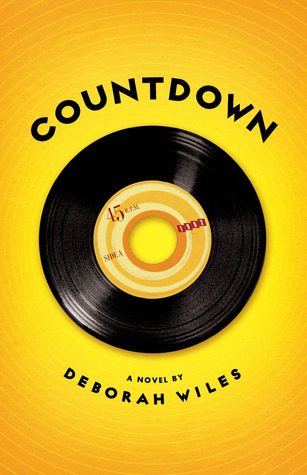
Countdown (Sixties Trilogy #1)

 I know some readers aren't overly fond of historical fiction, but I really do enjoy the genre as I learn details of history while reading an enjoyable story. For instance, I've heard about the Cuban Missile Crisis in school, but I didn't under the crisis part exactly until I read the first book in the planned Sixties trilogy, Countdown by Deborah Wiles.

Description (from the Publisher): Franny Chapman just wants some peace. But that's hard to get when her best friend is feuding with her, her sister has disappeared, and her uncle is fighting an old war in his head. Her saintly younger brother is no help, and the cute boy across the street only complicates things. Worst of all, everyone is walking around just waiting for a bomb to fall. It's 1962, and it seems the whole country is living in fear.

Review: Franny lives with her family in suburban Maryland just outside Andrews Air Force Base, circa summer of 1962. President Kennedy and Soviet Union leader Khrushchev duel on the possibility of a nuclear war. The world crisis continues in the background while Franny worries about her best friend's betrayal; adores her college-age sister, Jo Ellen; and fights with her saintly little brother, Drew. When not riding the tumultuous ride of early adolescence, she writes letters to Khrushchev, advising him to drop his threats and think rationally, prepares for air-raid drills, and investigates her sister's coded letters from someone named "Ebenezer."
  Countdown is a straightforward historical fiction that at times reads like a memoir. Unlike other historical fiction reads that I've read, it has a unique format. In a successful effort to give readers a sense of the country's total preoccupation with all things nuclear and Communist during the height of the Cold War, Franny's narrative is punctuated by newspaper clippings, advertisements for bomb-shelter materials, news broadcasts, brief vignettes about famous figures, ephemera, and more. All of these snippets of time period would make me anxious and feel bombarded with confusion and fear, which is similar to what Franny is feeling at the moment. I can definitely see how this format may not work with some readers, but if the time period and the events draw your interest I would highly recommend listening to the audiobook which was done very well. With the audiobook, you don't have to be afraid of the 'textbook' feel because the documentary format comes alive and Franny's coming of age is much more personal. Countdown is a great historical fiction read and I am looking forward to the other books in this Sixties trilogy.

Curriculum Connection: Social Studies

Rating: 4 stars

Words of Caution: Violence such as the race riots of the 1960s are in the back drop of the book. It is hinted at several times but not described in details. Recommended for Grades 5 and  up.

If you like this book try: The Fire-Eaters by David Almond, Shooting the Moon by Frances O'Roark Dowell

Tuesday, December 4, 2012

Stealing Parker (Hundred Oaks #2)

  I have been in a book rut for quite some time. I've started and dropped at least five books, all of which failed to grab my attention. When I came across Stealing Parker, I read it from front to back in a matter of a couple of days. Readers who enjoy YA contemporary romance or a well written, realistic romance should definitely pick up the book. Many thanks to Sourcebooks and Netgalley for an advanced reader's copy.

Description (from Goodreads): Parker Shelton pretty much has the perfect life. She’s on her way to becoming valedictorian at Hundred Oaks High, she’s made the all-star softball team, and she has plenty of friends. Then her mother’s scandal rocks their small town and suddenly no one will talk to her.
  Now Parker wants a new life. So she quits softball. Drops twenty pounds. And she figures why kiss one guy when she can kiss three? Or four. Why limit herself to high school boys when the majorly cute new baseball coach seems especially flirty? But how far is too far before she loses herself completely?

Review: Stealing Parker is a companion novel to Catching Jordan, a book I thoroughly enjoyed in 2011. There are many similarities between both books. They are both set in a small town of Hundred Oaks, Tennessee and feature characters who love sports. Realistic and witty dialogue coupled with endearing characters, and a tightly packed plot makes these books highly enjoyable and readable.
  Parker is our heroine and narrator. She is the high-school valedictorian and a star softball player. Her life is thrown into chaos when her mother suddenly leaves the family to move in with her girlfriend. Ostracized and bullied by many of her friends and her church members, Parker is constantly trying to prove that she is not like her mother. She quits her favorite sport, loses weight due to the "butch" label rumors. She is even taken to making out with random guys in a heartbreaking effort to prove to her point. I liked how Parker remained on the cusp of adolescence and adulthood, which is highlighted by the countdown of her 18th birthday on each chapter. Though she runs the house like an adult, she is still painfully self-aware of how others see her. For example, once she consciously knows how the hurts the boys she has playfully made-out with she stops this behavior.
  Parker's family drama cages her and prevents her from opening up to anyone, afraid that they may use her vulnerabilities as arsenal against her, which was viciously made clear by her best friend. Alone, abandoned, and hurt, Parker seeks solace from her best friend Drew and yearns for someone to understand her.  She thinks she has found the answer when she meets Brian, a hot 23-year-old assistant coach at her school. Brian seems to be a kindred spirit and is wounded by pains of his own. Though forbidden, things progress between Parker and Brian at a steady pass soon become physical. Brian seems more interested in trying to convince her to have sex than in talking. Mixed in with all this confusion is a budding and sweet romance with a longtime acquaintance, but her best friend Drew finally comes out to her and drunkenly confesses a secret crush on him. All of this drama forces Parker to identify what is most important to her and how to unload the burden of being someone else besides herself. The self-evaluation process realistically plays out. Parker begins the journey and we are left with the strong belief that her growth will continue. She doesn't have all the answers, but we can rest assure that she knows how to make the right decisions.
  Kenneally addresses important and hard hitting issues such as sexuality, religion, self-discovery, and self-love, but it never felt heavy handed to me. Like the themes themselves, the characters aren't one dimensional and leave food for thought once you finished reading the book. I really liked Parker's confessions or letters she wrote to God, revealing her most inner thoughts and emotions. It drew me closer to her as a reader. While I would have liked Parker spend more time with her mother and work out their issues, I do like how there is a starting place to mend their broken bond.

Rating: 4 stars

Words of Caution: Some language, crude humor, and strong sexual content (i.e. bases 1-3 are covered). Recommended for Grades 9 and up.

If you like this book try: The Dairy Queen series by Catherine Murdock, Catching Jordan by Miranda Kenneally

Wednesday, November 21, 2012

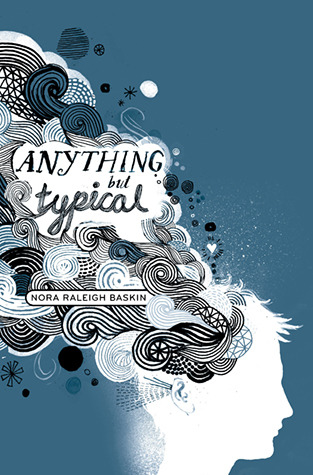
Anything But Typical

  I've read a few books that feature characters who have autism and for the most part really enjoyed them. It helps me look at the world with a different lens. Anything But Typical is a middle grade novel that successfully tells a story about autism with heart and universal appeal.

Description: Jason, a twelve-year-old autistic boy who wants to become a writer, relates what his life is like as he tries to make sense of his world.

Review: Baskin tells an enlightening story entirely from the point of view of Jason, an autistic boy who is a gifted creative writer, but is mainly viewed as the odd ball by the neurotypicals (i.e. normal people) both at school and at home because he can't comprehend human emotions and social interactions. He is most comfortable in an online writing forum called Storyboard, where his stories explore his rich imagination and eventually kindles an e-mail-based friendship with a girl. His excitement over having a real friend (and maybe even girlfriend) turns to terror when he learns that his parents want to take him on a trip to the Storyboard conference, where he'll no doubt have to meet her in person.
  With short chapters and precise word usage, Baskin describes Jason's attempts to interpret body language and social expectations, revealing the extreme disconnect created by his internalization of the world around him. Jason is an empathetic character and quite witty. He moves through his failures and triumphs with the same depth of courage and confusion of any boy his age. His story, neither overly heartbreaking nor saturated with saccharine sweetness, shows that the distinction between normal and not normal is hard to distinguish yet we ironically have no problems to label things as "different" and "defective". Since I have no personal experience with autism, I can't atest to the authenicity of Jason's voice, but I do appreciate Baskin for making Jason's story universal.

Rating: 4 stars

Words of Caution: None. Recommended for Grades 4 and up.

If you like this book try: Rules by Cynthia Lord, Mockingbird by for a YA read try Marcelo in the Real World by Franciso X. Stork
Thursday, November 8, 2012

Wild: From Lost to Found on the Pacific Crest Trail

 Wild is one of my quick picks for an adult nonfiction read. It is a powerful, blazingly honest, inspiring memoir of woman who took herself out of her personal hell by tackling a solo, monumental journey into the wildness which proves that no matter how dark things can get you do have enough strength to carry on.
Description (from Goodreads): At twenty-two, Cheryl Strayed thought she had lost everything. In the wake of her mother's death, her family scattered and her own marriage was soon destroyed. Four years later, with nothing more to lose, she made the most impulsive decision of her life: to hike the Pacific Crest Trail from the Mojave Desert through California and Oregon to Washington State—and to do it alone. She had no experience as a long-distance hiker, and the trail was little more than “an idea, vague and outlandish and full of promise.” But it was a promise of piecing back together a life that had come undone. Strayed faces down rattlesnakes and black bears, intense heat and record snowfalls, and both the beauty and loneliness of the trail. Told with great suspense and style, sparkling with warmth and humor, Wild vividly captures the terrors and pleasures of one young woman forging ahead against all odds on a journey that maddened, strengthened, and ultimately healed her.

Review: Wild is an unsentimental memoir of the author's three-month solo hike from California to Washington along the Pacific Crest Trail. Following the death of her mother, Strayed's life quickly disintegrated. Family ties from her siblings and stepfather melted away. Feeling emotionally numb, she dived head first into infidelity and drug use, which resulted in a divorced from her decent husband and best friend. For the next four years, her life quickly spiraled into darkness and there was no light at the end of the tunnel. Strayed is very frank about her flaws and her writing is very candid, which is what drew me to her story. Her dark days will resonate with others who shared a similar event(s) in their own lives, but her means to find peace within herself may be a bit far fetched but not impossible.
  While waiting in line at an outdoors store, Strayed read the back cover of a book about the Pacific Crest Trail. Initially, the idea of hiking the trail became an abstract idea, something that might be listed on someone's bucket list, but then it quickly became a goal. With absolutely no backpacking experience whatsoever, being woefully under-prepared for the wilderness, out of shape and carrying a ridiculously overweight pack, the author set out from the small California town of Mojave, toward a bridge crossing the Columbia River at the Oregon-Washington border. Many would call her decision to be idiotic and impulsive and they would be right in many ways as she suffered aches, pains, loneliness, blistered, bloody feet, persistent hunger, and suspicious people along the way. Personally, I cringed when she made several decisions that could have easily been deadly yet I couldn't help but admire the author's tenacity of sticking to her goal when there were several times she could have easily stopped. I found a small part of myself connected to her plight and her conversational tone engaged me throughout her story. Strayed discovered a new found sense of awe; for overcoming her limitations along with gaining her inner and physical strength while hiking the PCT. She is stunned by how the trail both shattered and sheltered her as she released all her emotional baggage along the way.
  Some readers have found that Wild is a book filled with self pity and wallowing, but aren't most memoirs just that? If you're looking for a book talking about the wonders of hiking and the Pacific Crest Trail, Wild will surely disappoint you as there is not much discussion to be found. If you are in the mood for a candid and an inspiring narrative, Wild may work for you.

Rating: 4 stars

Words of Caution: This book contains strong language, drug use, and frank discussion of sex. Recommended for mature teens and adults only.

If you like this book try: Into the Wild by Jon Krauker, Claiming Ground by Laura Bell, A Blistered Kind of Love: One Couple's Trial by Trail by Angela Ballard, Cactus Eaters by Dan White

Friday, October 12, 2012

Author Interview: E.K. Henry

  Happy Friday, Everyone! Today I'm pleased to have author E.K. Henry here to give us a little sneak peek to her book Freak. Before we get to the interview, here is a little info about E.K.: E.K. Henry has always had a passion for books ever since she can remember. She has grown up spending countless nights being swept away by her favorite books into the wee hours of the night. She lives with her son and husband in Tennessee. Freak is her debut novel.

Welcome to Books in the Spotlight, E.K.! Freak is a paranormal story with dystopian elements. What made you decide to blend these two genres in your story?  

Well, I did not really plan for it to be that way; it kind of just happened.  I came up with the idea for Freak while reading a story about a Mormon family that was getting their own reality television show.  Most of the family seemed thrilled about the idea, but one child in particular wasn't.  They didn't want the world to see how different their family was from mainstream society.  This story got me thinking about what it would be like to be forced to participate in a show that was meant to spotlight how different you are than everybody else.  I tried to imagine the worst scenario that I would hate to be put in myself, and that is how Freak was born. 

Books featuring vampires are pretty abundant. How did you make your book different? What draws you to these creatures of the night?  

Yes, vampire books are abundant, but that is actually what inspired me to write one.  I wanted to challenge myself to write a new twist.  That twist included having humans be the minority, vampires that could go out in the sun, and a reality television show.  I haven’t seen anything else out there that had all of those elements.

What are some of your favorite scenes or lines from the book?

 My favorite scene is actually a spoiler so I can’t go into too much detail, but the scene is where Juniper reveals to her friend, Abi, her thoughts on what the medicine has done to her friend.  When I was writing it, it took a twist that even I didn’t see coming.

Do you have a favorite vampire from books or movies? If so, who and why?  

I love the main character [Selene] in Underworld.  She is strong woman who stays true to herself.
If you could live in any paranormal world, either in books or movies, TV, where would you live and why?

I would live in any of Stephen King's books because I love the world he creates. I still blame him for my irrational fear of clowns.

Did anything surprise you while writing Freak?  

Yes, these characters took on  life of their own and quite frankly my nice outline that I created went out the window because the characters didn't want to behave and started doing what they wanted.

In less than 10 words, how would you describe Juniper? 

Determined and spirited

October is the month we gear up for Halloween. What is your most memorable Halloween?  

The Halloween where I dressed up like a killer clown.  I hate clowns and to be dressed like a psycho one freaked me the hell out, but I did it.  It made me feel empowered because I fought through a fear.

What can readers expect from Freak

A quick fun read that is full of action.

What's next for you? 

I am planning on at least a sequel.  There are also some novellas in the works that go deeper into some of the other character’s stories.

Readers, if you would like to know more about and contact E.K. Henry, please check out her website, Twitter, and email. You can also find her at Goodreads too. 

Be sure to check out the awesome giveaway that I'm currently running for Freak. Just click on the cover below to enter the giveaway. There is still plenty of time to enter!

Wednesday, September 12, 2012

Tasting the Sky: A Palestian Childhood

 I'm not a big biography or memoir reader, but I am attracted to stories that go beyond the every day occurences of ones life. Tasting the Sky by Ibtisam Barakat is an award winning and critically acclaim biography that takes place in the Middle East and is written for young adults. No matter how much I read about the Middle East, I always seem to learn more. The memoir is an enjoyable, insightful, and quick read that inspires hope. I think it should be read by young adults as well as adult readers.

Description: A memoir in which the author describes her childhood as a Palestinian refugee, discussing her family's experiences during and after the Six-Day War, and the freedom she felt at learning to read and write.

Review: With simple yet incredibly moving sentences, Barakat transports us from the comfort of our own homes to a hostile, foreign environment. It's the first night of the 1967 Six-Day War, which pitted Israel against the Arab nations of Egypt, Jordan, and Syria. It ended with the Israeli occupation of the Sinai and Gaza Strip, the Golan Heights, and the West Bank (Source: Six-Day War. (2012). In World History: The Modern Era. Retrieved September 12, 2012, from http://worldhistory.abc-clio.com/).
  Three-year-old Ibtisam and her family are uprooted from their home in the middle of the night, where the toddler hunts frantically for her lost shoe, loses her family as they join the throng of anxious Palestinians fleeing Ramallah into Jordan. Our hearts race and we become extremely anxious until the family is reunited after several desperate hours. With moments of harshness, stark reality comes this beautifully written memoir of the author's childhood on the Israeli-occupied West Bank. We learn first hand about what it's like to live in the backdrop of war and cultural displacement. The family endures poverty, separations and frequent relocation. Despite these hardships life seems to go on, by turns surprising, funny, heartbreaking and rich with possibility.
  In an overcrowded Jordanian school-room housing refugees, Ibtisam discovers Alef, the first letter of the Arab alphabet, and thus creates an intimate relationship between reading and writing, which allows her to spread her wings and imagination. Barakat and her brothers are Courageous and curious, but they are not perfect by any means. Like all children, they find themselves in troubles, have their mischief ways to assert their strong wills in defiance of the authorities that govern their lives. While reading Tasting the Sky, I never felt as if the book was politically motivated, but rather a coming of age autobiography that focuses on family, culture, and identity in the part of the world is almost always misunderstood.

Curriculum Connection: Social Studies

Rating: 4.5 stars

Words of Caution: There are some disturbing war images and allusion to attempted sexual assault. There is also a chapter that talks about male circumcision that is important to the culture. Recommended for Grades 7 and up.

If you like this book try: The Flag of Childhood: Poems From the Middle East by Naomi Shihab Nye, A Little Piece of Ground by Under the Persimmon Tree by Suzanne Fisher Staples

Wednesday, August 29, 2012

Author Interview with Sylvia Gunnery

 Today I'm pleased to introduce you to Sylvia Gunnery, the author of Emily for Real. The book is currently out in Ms. Gunnery's native Canada and soon to be released in the U.S. Before we get to the interview, here's some information about Ms. Gunnery (as found on the publisher's website): She is the author of many novels for teens and children. Often, the themes and characters in her books have developed from her classroom experiences with junior high and high school students. A recipient of a Prime Minister's Award for Teaching Excellence, Sylvia has written a teachers' resource, Just Write! (Pembroke, 1998) as well as guided reading books for Curriculum Plus. She has presented at conferences, libraries, and schools across Canada and works on curriculum development and assessment initiatives with the Nova Scotia Department of Education. Ms. Gunnery is here to talk about her writing style and her latest release, Emily for Real. I hope you enjoy the interview!

Welcome to Books in the Spotlight, Ms. Gunnery.  How do you incorporate important issues in your book without making it too serious yet realistic?


I’m really happy that you see the issues in Emily For Real as realistic and yet not overly serious. That is always one of my goals while writing. It can be so easy to moralize or try to “teach a lesson.” Of course, all our lives involve issues, but I try my best to keep myself in a kind of teen mindset without all the layers of adult judgement or expectations. For teens, a lot is being experienced or observed or considered for the first time. They can sometimes be more objective, even neutral, so issues don’t have the same weight they do for adults. This story was written from Emily’s point of view and she sees things differently from me. I really enjoyed looking at what was happening in her life through her eyes and watching her responses.


Out of all of your characters, which one could you relate to the most? Which was the hardest to write?


The character I relate to the most is Emily, perhaps because I was inside her world, listening to her thoughts and observations for so long. I also gave her a lot of experiences straight out of my own life—that first walk around the block wearing her new raincoat and rubber boots (even with her Mom phoning “Mrs. Day over on Robie Street”), shovelling snow with her Dad, hitchhiking with a guy, visits in a nursing home, taking the bus downtown, seeing people feed ducks in the Halifax Public Gardens right next to a sign that says “Please do not feed the ducks.”

   The character I found hardest to write is Leo. As I mention in the acknowledgements for the novel, Leo is based on a former student of mine named Theo. Theo’s the type of person who doesn’t say much but is always so observant, very bright, and basically a good person though his anger issues could blur that. It wasn’t easy to show readers, through Emily’s eyes, all those same qualities in Leo. I might have come closest to portraying him in the cafeteria scene where he convinces Emily to casually say hi to Brian and then nonchalantly walk on by. Leo really did understand why she felt so insecure, and he wanted her to get past that. A real good friend.


Strong friendship between boys and girls are rare to find in literature. What makes Emily’s and Leo’s relationship so special?
 
I agree that these relationships are rare in literature, but in real life I don’t think they are. I had lots of guy friends when I was a teenager (and now, too). As a teacher, I saw strong friendships between guys and girls in my classrooms—admittedly, a few of them did turn into romantic relationships and even marriages. Friendship is a great basis to build a romance on, for sure. I see Emily and Leo’s friendship lasting a very long time and not changing into a romance.
   The timing was really right for both Leo and Emily to become friends. He’d just switched to a new school where he knew only a few people, and he also had heavy responsibilities at home with not much room for friends. Emily was changing—the break-up with Brian and the shift in her friendship with Jennifer were, for me, symbolic of her moving from one place in her life to another. Both Leo and Emily were open to a friendship that would give them lots of room to be independent and yet be supportive when support was most needed. I’ve had those kinds of friendships and they’re really great.


 I really liked your top 10 tips for writing YA. How did you come up with your list and which would you say is the one that is often neglected by writers?

Glad you liked those tips. Thanks! Coming up with the list was easy…limiting it to only 10 wasn’t. J Basically, I thought about what I try to do to make my novels authentic. Writing YA is a complex process, just as all writing is, and respecting my teen audience is a very important part of writing for them.
It’s hard for me to say what other writers might neglect. Sometimes, though, I have wondered whether some authors put aside their adult perspectives and really do get inside the teen world—“Be a teenager thinking.”


What message would you like your readers to take away from your book? 


I do shy away from the idea of a “message.” Each person comes into a book with unique experiences and expectations, so in some ways, everyone is reading a different book. But I hope people who read Emily For Real have a chance to think about how family secrets may not need to be secrets at all and take away a strong sense of caring for family and friends.


Besides writing, what do you like to do? What are your hobbies and interests? 


I do a lot of reading. When I was studying writing at the Banff Centre in Alberta, one of my instructors was Alice Munro and she said to me, “When you’re not writing, read.” I came to
recognize that both writing and reading engage your mind in much the same way—like musicians going to concerts or basketball players watching NBA games on television.

My partner Jim and I have flower gardens that give me a break away from my desk during the spring and summer. Though I do own gardening gloves, I love digging in the dirt with my bare hands. Also, I enjoy long walks, sometimes alone and sometimes with my neighbours’ dog Willie. I live very close to two beaches and a provincial park, so there are lots of choices for where I can wander. There’s lots of time to daydream about my characters and what they’re up to when I’m gardening and walking.


I'm always curious to see what other people are reading. What is on your to be read pile? 

I’m almost finished re-reading Leon Rooke’s short fiction collection, The Last Shot. I love his control and pace—I just counted 12 lines for a single sentence. Perfectly smooth. I’ve recently begun Love in the Time of Cholera by Gabriel Garcia Marquez, switching from my habit of mostly reading Canadian-authored books. Last week, my sister loaned me two novels: The Paris Wife by Paula McLain and the historical novel Alice I Have Been by Melanie Benjamin which is written in the voice of woman who inspired Charles Dodgson to write Alice in Wonderland. They’ll be next. When I’m working toward deadlines (like I am right now for a junior novel ), I get a bit distracted from reading books and I switch to magazines. September’s The Walrus and Quill & Quire just arrived, so I’ll probably be reading those until my rewrites are finished.


 What is your next project? 


My next novel started on its way in early May with a bit of daydreaming and wondering when I was in Vancouver. I’ve made some notes and even written a few pages, but everything is so tentative right now. Vague. Three sisters are involved (ages 16, 17 and 21) and they’re driving from Halifax to Vancouver, something my own sister and I did with her German Shepherd dog, Max, when we were in our twenties. I wanted to minimize the world of these three sisters basically to the size of a car and always moving forward, and then explore who they are and are becoming. The other day, I gave them a hitchhiker and his dog to add to the mix. I’m curious about how things’ll work out for all of them. That’s the fun of it!

Thank you so much for stopping by, Ms. Gunnery! I wish you the best of luck with Emily for Real. Readers, if you would like more information about Ms. Gunnery or  Emily for Real, you can visit the Pajama Press website. Emily for Real can be purchased at Chapters/Indigo, Amazon.ca, Amazon.com and Barnes & Noble.

Definitely check out the  following blogs participating in the Emily for Real Blog Tour running during August: Open Book Toronto, YA Booklover Blog, Pub(lishing) Crawl, Midnight Bloom Reads and Musings of a YA Reader

Seventeen-year-old Emily’s world crumbles when her boy friend dumps her, and when she thinks her life can’t possibly get any worse, a series of secrets are revealed that threaten to tear her beloved family apart. Emily’s heart has been broken into a hundred pieces and she feels like there is no one to turn to, until an unexpected friendship blossoms with a troubled classmate named Leo. Sometimes moody but always supportive, Leo is Emily’s rock in an ocean of confusion and disbelief.
   But Leo doesn’t have an easy life either. He struggles to be both mother and father to his little sister while his mom battles her alcohol addiction. His deadbeat dad darts in and out of the picture, and Leo would rather he stay away, permanently. The two friends lean on each other, and in the end discover the inner strength to face whatever life throws at them.
   With incredible insight into the teenage psyche and speckled with pitch-perfect humor, author Sylvia Gunnery has created a heart-warming coming-of-age story that explores the intricacies of family and friendship.

Friday, July 13, 2012

Adult Minireviews: We Are All Equally Far From Love and

  I'm trying to experiment with different genres for my Middle Eastern Reading Challenge. I started out quite strong in children's literature. There is not much out there in the YA realm and the adult fiction/nonfiction realm can be tricky especially when it comes to politics and searching for a balanced book. I took a chance with two contemporary women writers from the Middle East, one from Palestine and the other from Egypt, who both focus on women's roles in their respective countries. I did like one of a little better than the other, but I still think I could do better than both of them.

Description (from Goodreads): A young woman is instructed by her boss to write a letter to an older man. His reply begins an enigmatic but passionate love affair conducted entirely in letters. Until, that is, his letters stop coming. But did the letters ever reach their intended recipient? Only the teenage Afaf, who works at the local post office, would know. Her duty is to open the mail and inform her collaborator father of the contents—until she finds a mysterious set of love letters, for which she selects another destiny.
  Afaf has lived in shame ever since her mother left her father for another man. And in this novel, her story is followed in turn by another: the story of a woman who leaves her husband for someone else, to whom she declares her love in a letter…The chain of stories that make up this singular novel form a wrenching examination of relationships and their limits—relationships tenuous, oblique, and momentous.


Review: When I started this book I was under the impression that it was a single love story, but I could not have been more wrong. This slim book is made up of dark, bleak, and depressing vignettes. In the course of her work, an increasingly isolated woman writes letters to a man she's never met that go from professional to personal; "I wanted to offer him the essence of my existence," she says. Intimate correspondence also informs "The First Measure," the teenager Afaf, who leaves school to work in the post office for her father, reading, and sometimes altering people's letters (changing "Palestine" to "Israel" among other edits). A married woman falls in love with the physiotherapist she visits for treatment and finds her new feelings overwhelming her conservative life. A woman's devotion to physical fitness fails to ameliorate her increasing horror and disgust with the world around her. A shy man who has failed in his university studies and works in a supermarket looks longingly at a woman on a public bench and thinks of the few women he has known.
  I'm not exactly sure how these vignettes connect. With the exception of Afaf and her family, we aren't given any names to any of the other characters. I was lost in trying to figure out the "he" and "she" were the same people in each story. The writing is poetic and the characterizations were interesting, but the book fails to provoke any thought once I finished it. I actually thought I was better off in reading pieces of the book instead of the whole thing.

Rating: 2 stars


Words of Caution: There are mature themes regarding sexuality, religion, and gender issues. Recommended for adults interested in modern Middle Eastern literature.

If you like this book try: The Consequences of Love by Leila Aboulela


Description: Bodour, a distinguished literary critic and university professor, carries with her a dark secret. As a young university student, she fell in love with a political activist and gave birth to an illegitimate daughter, Zeina, whom she abandoned on the streets of Cairo. Zeina grows up to become one of Egypt's most beloved entertainers, despite being deprived of a name and a home. In contrast, Bodour remains trapped in a loveless marriage, pining for her daughter. In an attempt to find solace she turns to literature, writing a fictionalised account of her life. But then the novel goes missing. Bodour is forced on a journey of self discovery, reliving and reshaping her past and her future. Will Bodour ever discover who stole the novel? Is there any hope of her being reunited with Zeina?

Review: I had better luck with Zeina than Shibli's book. The books begins with Successful literary critic Boudour is writing a novel about circumstances that made her abandon an infant, Zeina, when she was a young college student. Later, Boudour married and raised another daughter, Mageeda, a successful writer who feels curiosity and jealousy toward Zeina, now a musical phenomenon and her unknown stepsister. As Boudour tries to rewrite her life and recover her stolen novel, she becomes increasely aware of the unequal gender roles and expectations in the Egyptian society.
  I was really invested in the first half of the book. I thought the characters were multi-faceted and I kept waiting for the big secret of Zeina's identity to be revealed. I didn't mind the switch back and forth from past to present as Boudour essentially writes her memoir. It's when the second half of the book turns into a harsh commentary of the Egyptian society where men repeatedly betray women. Actually, I can't even recall a decent male character in the entire book. It's clear that the author is upset about the double standards found in the Egyptian culture, but the author does quote in length (i.e. almost five pages worth) from the Qur'an that illustrate this entrenched nature of this behavior, which I found was a bit excessive. I guess at some point the book shifted from reality to dreamlike qualities, but I really couldn't pinpoint that out to you. 

Rating: 3 stars

Words of Caution: Strong sexual themes throughout the book including attempted rape as well as some strong language. Recommended for adults interested in modern Middle Eastern literature.

If you like this book try: Girls of Riyadh by Rajaa Alsanea ; translated by Rajaa Alsanea and Marilyn Booth

Thursday, June 28, 2012

Before I Go To Sleep

 Are you looking for a suspenseful read to take with you on the beach? Check out S.J. Watson's debut novel Before I Go To Sleep especially if Memento is your kind of movie. If you like psychological thrillers instead of blood and gore, this book would be a great choice for you.

Description: 'As I sleep, my mind will erase everything I did today. I will wake up tomorrow as I did this morning. Thinking I'm still a child. Thinking I have a whole lifetime of choice ahead of me ...' Memories define us. So what if you lost yours every time you went to sleep? Your name, your identity, your past, even the people you love - all forgotten overnight. And the one person you trust may only be telling you half the story. Welcome to Christine's life.

Review: Before I Go To Sleep is an absorbing psychological thriller that grabs you right away and won't let you go. As the book opens, Christine wakes up every morning thinking she is still in her early 20s until she looks in the mirror and discovers she’s in her late 40s. The bathroom is plastered with photos that doesn't recognize. She has absolutely no recollection of her friends, family, her life, and even her husband. She is able to transfer things from short term to long term memory but is unable to retain them after she falls asleep, repeating the same nightmarish cycle all over again. While her personal memories (i.e. herself, her family, etc.) have vanished, she does remember how to do things and knows the names of objects. 
   We know as much, and as little, as Christine. Fiction and truth collide when her doctor advises her to keep a journal in order to remind herself every day of who she is.  The story is told by others don't mesh with what she has written down herself. I really enjoyed how Watson played with this notion of memory and the unreliable narrator. At times I, like Christine, had to second guess myself whether or not specific events happened or not in the book.
 
The characters are removed in the book, which normally I would have a problem with as a reader, however, it makes sense with the mysterious tone of the book. When I did find more about Christine, I didn't really like her but I still felt bad for her, if that makes any sense. 

   I will warn you that the book unravels at a leisurely pace. It was really hard for me to not turn to the end. I tend to do that with mysteries and thrillers if I'm pretty confident on the identity of the perpetrator. I did manage the big twist before Christine, however, I actually enjoyed the journey to the big reveal. The prospect of constant amnesia is frightening enough, but having people manipulate your memories is just creepy. Overall, the book held my interest and made me think about how fragile memories can be.
 
Rating: 4 stars

Words of Caution: There is strong language, violence, sexual dialog and situations. Recommended for mature teens and adults only.

If you like this book try: Turn of Mind by Alice LaPlante, Shutter Island by Dennis Lehane, The Dark Room by Minette Walters, Black Out by Lisa Unger

Wednesday, May 23, 2012

Author Interview: Alex Flinn on Writiing Breathing Underwater and Censorship

   I'm privileged to have Alex Flinn here on the blog today. Though she's mostly known for her sweet, romantic, and popular fairy tale retellings such as Beastly, A Kiss in Time, and Bewitching. What people might not know is that Alex's first book is the gritty, realistic fiction novel, Breathing Underwater, which was challenged but ultimately retained in the Richland School in Washington this year. I actually read about the challenge off of Alex's facebook page and asked if she'd be willing to chat about her experiences of having her book challenged and the writing process of Breathing Underwater. She graciously agreed.

  Before I get to the interview, I wanted to give you a brief bio on Alex. She was born in Glen Cove, New York. Before going to law school, she received a degree in vocal performance (opera) from the University of Miami. She practiced law for ten years before becoming a full-time author. She based her first book, Breathing Underwater, on her experiences interning with the State Attorney's Office and volunteering with battered women. Breathing Underwater won the Maryland Black-Eyed Susan Award in 2004.


  Thank you so much for doing this interview, Alex. How did you find out that Breathing Underwater was challenged? What were your first thoughts upon hearing the news? 

  I found out from a Google alert. I've actually been surprised Breathing Underwater hasn't been challenged more, since it has a few swear words, and I know some people think that's important. I think I've had an easy time because, since Breathing Underwater is a problem novel, maybe its value is more obvious (i.e., schools can say that it teaches about dating violence) than with another type of novel. That said, I was sorry it was being challenged because I do think it has great value and the kids might not get to read it. I was also surprised there wasn't more of an uproar about it. The same district challenged Sherman Alexie's book [Rummanah's note: The book Alex is referring to is The Absolutely True Diary of a Part-Time Indian which is awesome and a must read] last year, and everyone was up in arms. I don't know if my book is viewed as having less value so the censorship doesn't matter or if people are just bored, but it didn't seem like anyone really said anything in its defense.


 What does censorship mean to you as an author and as a reader? 

I think it's a shame because it keeps kids from being able to read a book they would enjoy and that might benefit them. In the case of Breathing Underwater, the challenges I have had have either been based on someone not reading the whole book (I've heard comments about not liking Nick's attitude toward women which, of course, is the whole POINT of the book, which someone would understand if they read the whole thing) or a few swear words that everyone has heard anyway. I'm a parent too, and I do pick and choose what my own kids would be exposed to, but I think it should be an individual decision. Also, it sort of amazes me that parents will let their kids see all sorts of violent PG-13 movies in grade school but will recoil at a mild swear word in a book. I guess that attests to the power people give books.


 In your opinion, what is the purpose of realistic fiction? Why is this genre so easily targeted by censors?

Realistic fiction portrays the world in a realistic way. Some readers don't care for it, but a lot of kids (including kids who don't read much at all) will read nothing but realistic fiction. I think it is easily targeted by censors because they either don't want to face that their kids are aware of certain issues or language or because they wish they weren't and want to blame a book. Also, I've seen reviews indicating that a parent was upset that a character in one of my books didn't share their values. Unfortunately, books can't all be about good kids doing wonderful things or they wouldn't have much of a story. A character needs to have flaws in order to have personal growth. For example, Kyle in Beastly is a jerk. He swears. He treats women as objects. I'm not advocating those things and I think readers know that. But that is why he needs to have a book written about him, because it is about him learning that those things are wrong. If he was a great guy, there would be no story. I think the kids get that but, again, if you skim, it's not as obvious.


  Most of the challenges arise from parents. As a parent yourself, have you previewed books for your kids? What advice would you give parents who are completely new to the YA realm? 

Frankly, I'm pickier about movies, but I do notice what my kids are reading. For the most part, my daughters haven't been all that interested in reading books above their age group (The one exception was the Twilight books, and I allowed my daughter to read the first three but not the fourth at age eleven). If I have a real question about a book, I have checked the School Library Journal reviews, which any parent can see on Amazon. Common Sense Media, though sometimes maligned by authors, is not a bad site either. I think they usually place a book as being about a year older than I would. Language, for the most part doesn't bother me, but I recommended that my daughter hold off on reading The Hunger Games until she was twelve just because it was scary. If she'd really wanted to read it, I would have let her, but I suspected she wouldn't like it. She did wait but eventually read the books.


 What is your favorite challenged/censored book you've read and why?

To Kill a Mockingbird because it's a great book.


Why did you want to write about dating violence? 

I volunteered with battered women and I thought it was an important and interesting issue.


Most of the books, at least the ones that I'm familiar with, on dating violence are told from the female point of view. What made you decide to write it from Nick's point of view? 

He was the only character that knew that side of the story. I've always liked to consider why people do what they do. When I was a young teen, I became familiar with Sondheim's musical Sweeney Todd, which was the first time I'd ever seen someone give voice to a character who was doing something really bad, yet sought to see his point-of-view. I also had the bizarre experience of being in three different English classes (in 10th, 11th, and 12th grades -- I switched schools) that read The Crucible and then being in a production of the opera in college, as one of the crying out girls. This is another play that really explores the roots of evil, what makes people do what they do, if they know it is wrong or not. I researched that era a lot and found that one of the girls (in real life) portrayed in that play (Actually, the girl I played) actually did apologize to the families of the women who were hanged on her evidence. So, did she know at the time? Did she not understand what it meant to accuse people who would then be killed? Was she too young and just following her parents? Or was she just so caught up in what was happening, as Mary says in the courtroom scene, that she didn't realize what was real and what wasn't? I am very fascinated by people's motivations. In my mind, and from the research I did, Nick (abusers in general) really did not realize he'd done anything wrong and was able to justify his actions to himself. The story, of course, is about him realizing that he can't continue to do so.


What character surprised you the most while writing Breathing Underwater

Nick. I started writing the book in the girl's viewpoint with just a scene or two in Nick's viewpoint, but I became completely obsessed with him.


I was surprised to read Nick's clarity in his journals, which made the book that much more powerful to me. Why did you decide to use the journal motif instead of the group therapy? 

I like split narrative books like this, such as The Prince of Tides or Rob Thomas's Rats Saw God. That was what I wanted to do, two stories that dovetailed. The journals seemed like the best way to do that.

It's been 11 yrs since Nick's story was written. Where do you imagine him to be today?

I always tell teens he's going to go to college and lead a blameless life, which is why I can't write a sequel to his story.

  Thank you so much for taking the time to chat with us, Alex. I would like to think the quietness surrounding the book to mean that the book's purpose is quite obvious. 4 out of 5 board members agreed to leave the book on the 12th grade curriculum list and I've read teachers views on the book's importance and power. As a librarian I feel obligated to let parents know of any red flags that are found in the books that I feature on my blog just as if they had asked me about the book on my library shelves, which is how I came up with the "Words of Caution" part on my blog. I want to give the parent enough information so they can make the ultimate decision. Only a parent and child can know what is right for them.