Pages

Showing posts with label Marriage. Show all posts

Friday, August 9, 2013

Painted Hands

  I've always been a fan of multicultural and immigrant reads. When I read the synopsis to Jennifer Zobair's Painted Hands, it hit close to home and I knew I had to read it. Many thanks to the publisher and Netgalley for a chance to read an advanced reader's copy of the book.

Description (from the Publisher): Muslim bad girl Zainab Mir has just landed a job working for a post-feminist, Republican Senate candidate. Her best friend Amra Abbas is about to make partner at a top Boston law firm. Together they've thwarted proposal-slinging aunties, cultural expectations, and the occasional bigot to succeed in their careers. What they didn't count on? Unlikely men and geopolitical firestorms. 
    When a handsome childhood friend reappears, Amra makes choices that Zainab considers so 1950s--choices that involve the perfect "Banarasi "silk dress and a four-bedroom house in the suburbs. After hiding her long work hours during their courtship, Amra struggles to balance her demanding job and her unexpectedly traditional new husband. Zainab has her own problems. She generates controversy in the Muslim community with a suggestive magazine spread and friendship with a gay reporter. Her rising profile also inflames neo-cons like Chase Holland, the talk radio host who attacks her religion publicly but privately falls for her hard. When the political fallout from a terrorist attempt jeopardizes Zainab's job and protests surrounding a woman-led Muslim prayer service lead to violence, Amra and Zainab must decide what they're willing to risk for their principles, their friendship, and love.

Review: Marketed as The Namesake meets Sex in the City, Jennifer Zobair's debut novel Painted Hands is thankfully much of the former than the latter book. Though the story follows three different women's journeys, at its very heart, Painted Hands, is an exploration of what it means to be a Muslim woman in the post 9/11 world. Though I was drawn to the subject matter because I closely identify with the characters given my own personal background, I was also a bit concerned on how the characters would be written and how the tricky subject of religion is discussed. I'm happy to say that the book went beyond my expectations. I loved and cared for the characters so much that I compulsively read it in one sitting. 
  Zobair creates a cast of characters that give a wide ranging and for many a new look at Muslim-American culture from a female perspective. Within her story about navigating love and life while balancing Muslim religious and cultural beliefs with an American way of life, Zobair provides an array of characters covering the spectrum between devout followers of Islam and those who reject the beliefs of family and childhood.
   The story is very simple as it follows a group of friends for more than a year as they juggle careers, political differences, the trials and tribulations of love and prejudice. Zobair deftly captures the conflict all women face between the desire to be true to themselves and their own beliefs and the struggle to meet the expectations of family and friends. I think it's super important that Zobair made these women intelligent career women who think critically and logically for themselves and are assertive. While I may not agree with some of their decisions and/or actions, I felt the characters were authentic and not caricatures that I've met over and over again in other multicultural reads.
  Even though I was wrapped up in the lives of her characters, what kept me glued to the pages is how Islam is explored, defended, and supported in the book. Zobair's characters aren't afraid to raise questions and think outside of the traditional box. It gave me a lot to ponder. I also very much appreciated on how the characters varied in their devoutness to Islam without any suggestions of whether they are good or evil, which probes the reader to think about the Muslim identity.
  Painted Hands balances a story of women without overdoing it on the politics and religion. It allows readers to be exposed to the lesser known and good side of Muslim-American culture and the politics of being Muslim in America. Ultimately, I think the book shows that no matter the differences we share, we all are trying to achieve the same goals.

Rating: 4 stars

Words of Caution: There is some language and sexual situations discussed. Recommended for mature teens and adults interested in exploring contemporary literature featuring Muslim protagonists.

If you like this book try: The Namesake by Jhumpa Lahiri, Life Isn't All Ha Ha Hee Hee by Meera Syal

Tuesday, July 23, 2013

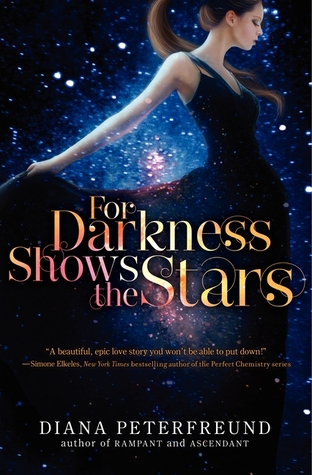
For Darkness Shows the Stars (For Darkness Shows the Stars #1)

  For my last challenge of 2013, I'm participating in the Classics Double Challenge hosted by One's Librarian Book Reviews. The object of this challenge is to read a classic (the term is used loosely to include fairy tales, mythologies, classics, any kind of original story) and couple it with a retelling (the original and the newer book have to relate in some way that you can define; it doesn't have to be a straight-forward retelling). My objective with this challenge is to read some classics that I've read yet.


Description (from Goodreads): It's been several generations since a genetic experiment gone wrong caused the Reduction, decimating humanity and giving rise to a Luddite nobility who outlawed most technology.
   Elliot North has always known her place in this world. Four years ago Elliot refused to run away with her childhood sweetheart, the servant Kai, choosing duty to her family's estate over love. Since then the world has changed: a new class of Post-Reductionists is jumpstarting the wheel of progress, and Elliot's estate is foundering, forcing her to rent land to the mysterious Cloud Fleet, a group of shipbuilders that includes renowned explorer Captain Malakai Wentforth--an almost unrecognizable Kai. And while Elliot wonders if this could be their second chance, Kai seems determined to show Elliot exactly what she gave up when she let him go.   But Elliot soon discovers her old friend carries a secret--one that could change their society . . . or bring it to its knees. And again, she's faced with a choice: cling to what she's been raised to believe, or cast her lot with the only boy she's ever loved, even if she's lost him forever.

Review: For Darkness Shows the Stars is a retelling that does everything right. Though it superficially maintains the plot points and themes of Jane Austen's Persuasion, it goes beyond and creates a new darker, post-apocalyptic world. Some readers were not thrilled by how Peterfreund dealt with rough handled morality in the story, but I would disagree. I think her decision to narrow her focus on the society enriched my pleasure of reading Austen's original work considerably. 
  The world that Peterfreund created is very intricate and detailed. While it takes some time for the world to unfold and one to grasp the social hierarchy, I was never confused but rather engrossed. Elliot North is our heroine who happens to be a Luddite, one of the elite destined to care for the mentally Reduced remnant after human genetic engineering went catastrophically wrong. 
  Eliot is just as charming as she is in the original book. She is duty bound to her family and her society, but the more she works with the Reduced, the more she has begun to question her duty; her family seems more interested in luxurious leisure than estate management. Her people will starve without recourse to forbidden technology, and more and more Post-Reduced children are being born. 
  One of the "Posts" that we get to know intimately is that of Kai Wentworth, Eliot's secret best friend turned romantic interest. Kai is extremely intelligent and longs to explore the world outside his designated boundaries. He and Eliot both know their romance is doomed due to their social status and the gap of his disappearance has wounded our heroine deeply. Now he has returned with the fleet of Post explorers who could be the last hope for saving Elliot's heritage, but his bitterness toward Elliot may be hiding a more dangerous secret. 
  I loved how the author gave insight to Eliot and Kai's relationship by interspersing letters written by their younger selves. You can see how naturally their relationship grew and evolved unlike the Austen original which underplayed the romance and reducing it to body language and signals. His passion rubs off on Eliot and we understand where their spark comes from. Though I already knew the outcome of the story, I couldn't help but feel frustrated whenever an obstacle came in Eliot and Kai's happily ever after, which I think is a sign that the author knows how to write a romance. 
While I liked that the society was different and original but still addressed the major themes of social and class distinctions, the book still felt a bit unfinished. I would have liked to see how the issues of slavery, anti-intellectualism and fundamentalist religion play out and hopefully it will be explored more when Peterfreund revisits the world in a different angle in her companion novel, Across a Star-Swept Sea, which will be released this fall. Readers looking for a swoony romance that isn't hindered by some depth, a steady pace, and a likable heroine should definitely check this book out. 

Rating: 4.5 stars

Words of Caution: There are rumors of possible sexual situations involving a character but it's never really explored or clarified. Recommended for strong Grade 7 readers and up.

If you like this book try:

Thursday, July 18, 2013

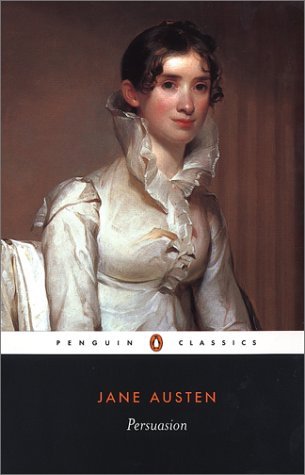
Persuasion

  Persuasion, published posthumously in 1818, is Jane Austen's last completed novel. Though it isn't as recognizable as Pride and Prejudice, Emma, or Sense and Sensibility, it is perhaps my favorite Austen novel. The writing and social satire is sharp and biting. The romance, of course, is sweet, satisfying, and the center of the book.

Description (from Goodreads): When Anne Elliot falls in love with a handsome and charming young man, she must make a wrenching decision. The man she loves is perfect in every way...except one: he lacks the wealth and social status that would make him a suitable match for Anne. At least, that is what friends and family persuade Anne to believe. So Anne breaks off the match and sends Wentworth away, but she can't help wondering: Did I do the right thing? It is a question that will haunt her for years until, unexpectedly, Wentworth returns. His circumstances have improved greatly, but is it too late for Anne?

Review: Like all of Austen's novels, the plot of the book is very straightforward. Our heroine, Anne Elliot, made a mistake eight years ago and the question of "What if?" has haunted her ever since. Anne was in love with a navy officer named Frederick Wentworth when she was nineteen years old. Wentworth was everything that Anne wanted in a spouse except he lacked two important things: social stature and money. Through persuasion and influence from her peers and society, Anne went against her gut instincts and declined Wenthworth's marriage proposal. Now in her late 20s (which is an old maid in Austen's times!), Anne has been shuffling between and living with vain, superficial, and irritating family members and friends. And with the unpredictable hands of fate, she once again encounters Wentworth who is now a renowned Captain in the Royal Army. The two are now forced to revisit old wounds and perhaps make amends.
  I absolutely adored Anne and I think she's probably the most realistic heroine that Austen created. She is logical, quiet, calm, and thoughtful. She isn't the first one to make impulsive decisions or rash prejudices against people she's met, but an observer of human behavior. Her thoughtfulness is her flaw as she over thinks everything. Though we may frown at her decision to decline Wentworth's proposal, we can understand why she declined. Without money and social stature, the two that made her society go round, there wasn't much of a future for Anne and Frederick. The prospects of attaining a future that went beyond attending balls, house visiting, and taking care of families is what Anne and Frederick both wanted. With that understanding in mind, her sacrifice of happiness leaves a bitter taste in our mouths as we watch Anne get belittled and brushed over. Anne immediately gets our sympathy and we hope for the moment where she stands up for herself.
   Unlike Anne, Frederick is a hard character to like at first. He is distant and appears extremely cold. His actions don't always make sense as he tries to make Anne jealous by being someone else's suitor, but we have to remember that is what Anne perceives him to be as we are watching the story unfold in her eyes. I thought it was interesting how our perceptions of Frederick changes as we hear other characters' opinion of him.
  The romance of Persuasion is very subdued, immersed in the quiet glances and in the body language of Anne and Frederick. The two play around the fire of attraction though their pride and resentment is what keeps them apart even though their pairing is now acceptable in the eyes of society. It is completely frustrating watching these two characters who are obviously in love with one another to come clean and actually communicate, but when they do the book soars. If you love romance and second chances, do pick up Persuasion.
 
Rating: 4.5 stars

Words of Caution: None. Recommended for teens and adults.

If you like this book try: For Darkness Shows the Stars by Diane Peterfreund, Captain Wentworth's Diary byThe Family Fortune by Laurie Horowitz

Thursday, May 16, 2013

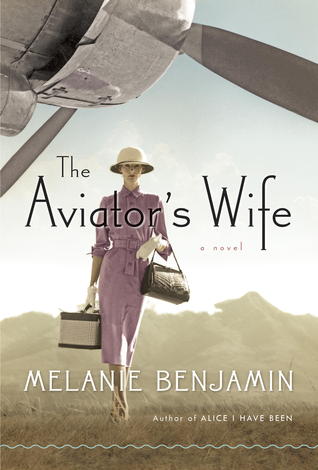
The Aviator's Wife

   One of the books I have recommended picking up for Spring Break was The Aviator's Wife by Melanie Benjamin. The book has received many glowing reviews. I knew very little about the Lindberghs except for the kidnapping of their first child in 1932. I enjoyed the book's historical detail and highly recommend it to fans of historical fiction.


Description: Despite her own major achievements--she becomes the first licensed female glider pilot in the United States--Anne Morrow Lindbergh is viewed merely as Charles Lindbergh's wife. The fairy-tale life she once longed for will bring heartbreak and hardships, ultimately pushing her to reconcile her need for love and her desire for independence, and to embrace, at last, life's infinite possibilities for change and happiness.

Review: The Aviator's Wife pulls back the curtain on the marriage of one of America’s most extraordinary and famous couples: Charles Lindbergh and Anne Morrow Lindbergh. Readers anticipating an idyllic romance between Anne and Charles will be disappointed as Benjamin doesn't hold anything back from their troubled marriage.
  The story begins when Anne, the self-effacing daughter of a suffragette and an ambassador, is surprised when Charles, already a celebrity thanks to his first trans-Atlantic flight in 1927, asks her--instead of her blonde, outgoing older sister Elisabeth--to go flying with him. Anne, who is always in the shadow of her sister, is absolutely shocked when Charles proposes. She believes the marriage is a dream come true, which at first is true.  The honeymoon phase of their marriage consists of flights all over the world: Anne becomes a pilot and navigator and Charles' indispensable sidekick. Due to couple's celebrity status, they are constantly hunted down by the paparazzi. Charles, a man who liked his privacy yet believed his celebrity status was his self-right, wanted to stay out of the limelight.
  In 1932 the marriage crestfallen when the Lindberghs' first child is kidnapped from his nursery, the resulting press furor almost destroys Anne. Charles has put on a front that he can deal with this tragedy while he leaves his wife to face her grief on her own. Anne suffers the downside of fame as public adulation turns to prurient sensationalism. Charles, wanting to leave the trial and the memories of the kidnapping, convinces Anne to take refuge abroad, where they enjoy the orderly routine and docile press of the Hitler regime, as long as Charles is willing to accept a Nazi medal and attend rallies. However, Kristallnacht proves too much even for Lindbergh's anti-Semitism, and he and Anne return to the States as war threatens. As more children arrive, Anne is beginning to bridle at Charles' domineering ways, however the aspiring author is too insecure to contradict him even as he offends her liberal friends and family by siding with right-wing groups who claim that the Jews are trying to force America into war.
  Benjamin's primary focus is on Anne's evolution from submissive helpmate into the author of the feminist classic Gift from the Sea. The character growth steadily builds once she consciously decides that she will no longer live in the shadows of her famous husband. I was surprised by the extremely unsympathetic portrayal of Charles. I didn't know much about him before reading this book but I do remember how much he was adored by the country. Instead of making him a one dimensional villain, Benjamin makes him three dimensional and sheds light on his both domineering and vulnerable aspects of his life. As much as he hated being a celebrity, he yearned for prestige, honor, and accolades. He felt all of his hard work was completely wiped-out because of a personal tragedy which he never got over. Self-exiling to Germany and upholding unpopular political views during the buildup to World War II was his attempt to regain what he had once lost.
  There are plenty moments of suspense, especially where the kidnapping and trial of the Lindbergh's first child is concerned to keep the plot moving. I enjoyed watching Anne grow though I may not entirely agree with how she lived her life. After finishing the Aviator's Wife, I wanted to look up and read more about the Lindberghs, which to me is always a good sign of a historical fiction done well.

Rating: 4 stars

Words of Caution: There is some language, sexual situations along, ethnic slurs with disturbing images. Recommended for mature teens and adults.

If you like this book try: Loving Frank by Nancy Horan, The Paris Wife by Paula McLain, Z : a novel of Zelda Fitzgerald by Therese Anne Fowler.

Thursday, January 31, 2013

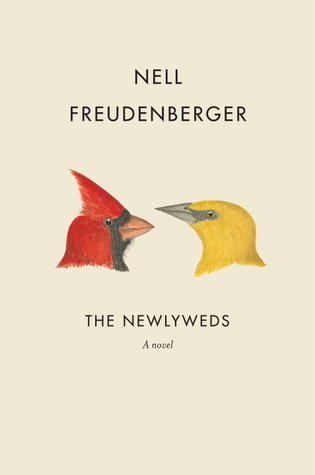
The Newlyweds

    The Newlyweds is an intimate view of a relationship, facing the usual communication issues, not helped by secrets and a cultural divide. I had high hopes for this book but ultimately I felt underwhelmed and disappointed after I finished it.

Description: From Bangladesh, Amina and her doting, complicated parents pin their hopes for their future on the marriage she has arranged with George in Rochester, who she meets on an online dating site geared towards east Asians and their North American suitors. This is a sweet, quiet little story about two people moving across nations to be together and carrying with them the baggage, desires, and secrets of two people moving across the world to be together.

Review: In her latest novel, Freudenberger examines a marriage arranged via the Internet as well as cross-cultural confusion and missed opportunities. Amina and George met on AsianEuro.com and get married. For Amina the marriage to George is an escape from her family's straitened circumstances in Bangladesh and a bright opportunity in the "Eden-like" America. For George, the marriage is way to wade his way out of "games" that women played.
 Arriving in snowy Rochester in 2005 is a culture shock for Amina, but within three years she makes the best of her situation. She gets her green card, is married to George, and is taking college courses when not making espressos at Starbucks. Her focus is changed from making a life for herself to bringing her parents to America. Things seem to be moving at a progressing speed, except for her marriage. Sex and intimacy is awkward, Amina's faith seems to falter and ebb away due to George's reaction, George loses his job, and Amina discovers something that makes her doubt his sincerity. She eventually returns to Bangladesh to bring her parents to the U.S., but a problem with her father's visa keeps Amina there and forces her back into the morass of her extended family's resentments and petty jealousies, all of which she'd hoped to escape in marriage. Add to her troubles an old suitor, Nasir, still thinks there's a chance for a relationship between he and Amina.
  The Newlyweds is a quiet book that takes its time in unfolding the marriage and various relationships surrounding Amina and George. Normally this would be okay since analyzing these relationships would allow the author to explore each character, however, I didn't really find any of the characters to be interesting. I felt a kinship between Amina and myself since we are from similar cultural backgrounds, but she doesn't stray very far from the stereotypical passive Indian Subcontinent woman. Unlike Amina, I had no frame of reference for George. I could not have conjured an image of him in my mind nor did I really feel like I got to know him. For a main character, he is very flat, boring, and relentlessly whiny. The only reason why I kept reading The Newlyweds is to discover the big secret that George is harboring from Amina, but that too seems very anticlimactic.
 Though Freudenberger does well in capturing the off-kilter feelings of a young woman in a country so unlike her birthplace and seems to be well informed of the Bangladeshi culture, there is a real lack of spice and emotion in her story. The cultural differences in the first half of the novel does prompt some enjoyably wry humor, but aside from that there is no warmth from its characters. Freudenberger's tone is detached and cool throughout, even when violent incidents are described, which makes it difficult to emotionally engage with the story. The novel is somewhat too dependent on cultural cliches and remains on the superficial level to entirely satisfy.

Rating: 3 stars

Words of Caution: There is some language and sexual situations. Recommended for older teens and adults only.

If you like this book try: In the Kingdom of Men by Kim Barnes, The Law of Similars by Chris Bohjalian

Thursday, October 18, 2012

Gone Girl

  Gone Girl is probably the most talked about book of this summer. I wouldn't be surprised if you've seen the cover graced upon the displays at your local bookstore or be a suggested read from librarians, booksellers, or even from friends. The book has sat comfortably on the New York Times bestseller list for many weeks. If you only have limited reading time this year, definitely put Gone Girl on top of your reading list.

Description (from Goodreads): On a warm summer morning in North Carthage, Missouri, it is Nick and Amy Dunne’s fifth wedding anniversary. Presents are being wrapped and reservations are being made when Nick’s clever and beautiful wife disappears from their rented McMansion on the Mississippi River. Husband-of-the-Year Nick isn’t doing himself any favors with cringe-worthy daydreams about the slope and shape of his wife’s head, but passages from Amy's diary reveal the alpha-girl perfectionist could have put anyone dangerously on edge. Under mounting pressure from the police and the media—as well as Amy’s fiercely doting parents—the town golden boy parades an endless series of lies, deceits, and inappropriate behavior. Nick is oddly evasive, and he’s definitely bitter—but is he really a killer? As the cops close in, every couple in town is soon wondering how well they know the one that they love. With his twin sister, Margo, at his side, Nick stands by his innocence. Trouble is, if Nick didn’t do it, where is that beautiful wife? And what was in that silvery gift box hidden in the back of her bedroom closet?

Review: A common complaint of not liking a book is the failure to connect to the main character(s). Readers, including myself, want to have the ability to align themselves and support or at the very least find something redeemable about the protagonist in order to have an active, enjoyable role in reading. There are a very few books I have loved that feature despicable characters and Gone Girl has made that list.
  Deliberately deceptive, Gone Girl is set up to be your average "who dunnit" murder mystery. You are given an outline of a typical murder plot. A perfect wife's disappearance plunges her husband into a nightmare as it rips open ugly secrets about his marriage and, just maybe, his culpability in her death. In the first half of the book we are introduced to Nick and Amy as they revel in the happy bliss of marriage. Soon that mirage ebbs away after both individuals are laid off from their jobs and a sudden move from move New York to North Carthage, Mo., where Nick ailing parents suddenly need him at their side. Since Nick and Amy were so good playing the part of a perfect couple, no one ever suspected that the marriage was fraying, until the fateful morning on their fifth anniversary when Amy vanishes with every indication of foul play.
  With mounting evidence stacking up against Nick, his innocence is immediately questioned. His is incapable  of communicating any grief over the sudden loss of his darling wife, which doesn't help him in the case at all.  As a reader, I was even appalled at his insensitivity, his ineptitude of not cooperating with the police, and his insistent whine about Amy's flaws. Soon I began to see the real Nick. A hollow man who used his wife to give himself an identity and resented her when he failed to live up to her expectations of a great husband, but does this mean he deserves to get tagged as his wife's killer? And if by the off chance that Nick is actually innocent then what really did happened with Amy? Flynn intersperses the mystery of Amy's disappearance with flashbacks from her diary, which allows us to get a chance to know Amy and her perspective of her failing marriage. Her silent cries, only written on paper, earn our sympathies.
  The first half of the book is purposely very slow as Flynn sets up the players of her story. We are given enough time to form our opinions about Nick and Amy from either their own accounts or what they've written about themselves. We are manipulated to believe certain things are true until the huge twist at the half way mark of the book is revealed and then we are asked to re-evaluate the characters. My feelings for the characters changed quickly like a mood ring and I couldn't wrap my heads around how incredibly sick and twisted these characters can be.
  After discussing this book with several others who have also read it, the twist will either make you love the book and continue to read it in a feverish attempt to finish it or hate the book and make you regret for falling for the hype. I, personally, thought the twist was incredible and raised the book from your average murder mystery to a psychological cat and mouse thriller. I was so happy to find a book that I couldn't predict in advance. Many readers have also complained that the ending was anticlimactic  but I would have to disagree. I think Gone Girl is one of those rare thrillers whose revelations actually intensify its suspense instead of dissipating it. The final pages are chilling and I don't think it could have ended any other way. Once I finished the book, I had to find someone to talk about it and that is why it will be my selection for my turn to host the book club in January.

Rating: 5 stars

Words of Caution: There is strong language, violence, implied sex, and disturbing themes. Recommended for mature teens and adults only.

If you like you like this book try: The Girl in the Box by Sheila Dalton, Our Dailly Bread by Lauren B. Davis, Never Tell a Lie by Hallie Ephron, Dare Me by Megan E. Abbott, Into the Darkest Corner by Elizabeth Hayes

Friday, September 14, 2012

Tiger Lily

  While I love a good love story with a happy ending, there is a part of me that is drawn to the darker, subdued romance found in tragic love stories. There is something captivating and realistic about a love that could have been. Tiger Lily is an enthralling and haunting story of a girl who may be obscure in other retellings of Peter Pan, but now leaves an eternal mark on those who meet her in this novel.

Description (from the Publisher): Before Peter Pan belonged to Wendy, he belonged to the girl with the crow feather in her hair. Fifteen-year-old Tiger Lily doesn't believe in love stories or happy endings. Then she meets the alluring teenage Peter Pan in the forbidden woods of Neverland and immediately falls under his spell.
Peter is unlike anyone she's ever known. Impetuous and brave, he both scares and enthralls her. As the leader of the Lost Boys, the most fearsome of Neverland's inhabitants, Peter is an unthinkable match for Tiger Lily. Soon, she is risking everything—her family, her future—to be with him. When she is faced with marriage to a terrible man in her own tribe, she must choose between the life she's always known and running away to an uncertain future with Peter.
    With enemies threatening to tear them apart, the lovers seem doomed. But it's the arrival of Wendy Darling, an English girl who's everything Tiger Lily is not, that leads Tiger Lily to discover that the most dangerous enemies can live inside even the most loyal and loving heart.

Review: Thanks to Barrie's bittersweet classic tale of Peter Pan and the many different film adaptations of his book, we are always expecting Neverland to be a magical place full of fun, danger, and adventure. What is hidden behind the scenes is the mud that accompanies the white sandy beaches and gorgeous sunsets, the mosquitoes, and croc-infested swamps. Anderson's enchanting book, Tiger Lily, opens our eyes to every light and dark aspect of Neverland where the good guys don't always win and love does not conquer all.
  Though the novel is dark, it still retains its lyrical beauty through exquisite descriptions and searing honesty that goes straight to your heart, which our heroine, Tiger Lily, perfectly embodies. Neither a traditional girl associated with femininity nor a boy, Tiger Lily is cursed to never be accepted. It's not that no one cares for her, but they are puzzled as to which label to give her. She refuses to change herself even if it would make things easy on her. She has long battled bullying from the children and elders of her tribe of not quite being accepted. After one transgression too many, she is told she must marry Giant, a violent oaf who mistreats her whenever the chance presents itself. It is only natural that Tiger Lily would fall in love with a boy who reflects her emotions and have him be Peter Pan, someone who she must avoid at all cost.
  With a clever narration choice, Anderson has Tiger Lily's story told by Tinkerbell's point of view. In this rendition of Peter Pan, Tink is unable to speak but we can hear her thoughts. Having Tinkerbell as the narrator, we accomplish many things at once. Not only are we are able to hear it on a very personal level and get a close look at all the characters individually whilst having a wider scope than normal 1st person allows, but it's also a reflection on the tension and metaphor in this post-colonial fable. Before reading Tiger Lily, I was honestly at a lost of who she is and whether or not she is a real character in Barrie's story. I actually had to look her up and there's not that much information about her, except for the one line in the Disney's Peter Pan. I really think that's a reflection of the narrative choice. Tiger Lily also touches upon other important issues that brim to the surface such as wilderness and civilization, gender and power, time and change. These themes are discussed but they aren't forced or repetitive. Tiger Lily is not just an ordinary love story, which is something I extremely admire about it. 

  Like Tiger Lily, Peter is also hard to identify. While he may physically look young and characteristicly known for his reckless behavior and irresistible charm, there is a vulnerability to him too. He is lost, unsure of his purpose in Neverland and not suited to guide the Lost Boys though he refuses to give up the leadership role. I think one of the most touching scenes in Tiger Lily shows how the Lost Boys take care of a small infant, which really exemplify their concerns.
  The villains in this story are as complex as everyone else. Anderson offers new and interesting interpretations for familiar characters. James Hook is a sad, old man who came to Neverland on dreams to pursue eternal youth, but has failed in his mission. He has since then descends into alcoholism and his obsession with Peter Pan is actually a reflection of his own self hatred. Although Hook is the star villain, I couldn't help but become memorised by Smee who murders those he admires for their strength and beauty but then mourns their deaths. It's almost as if he's trying to absorb his victims goodness into himself.
  I initally gave Tiger Lily 4.5 stars when I finished reading the book, but after reflecting on it and writing this review I realized that's doing this book a diservice. Intoxicating, dangerous, and emotional, Tiger Lily's tale isn't easy to forget. Yes, it is melancholy and while it may not bring a happy contented sigh after we close the page, we have to remind our selves that Barrie's tale didn't have a happily ever after either and a happy ending would undermined all important character growth.  


Rating: 5 stars

Words of Caution: There is a hint of sexual assault that takes place of the page. There is also a few disturbing images in the book. Recommended for Grades 8 and up.

If you like this book try: Lament by Maggie Stiefvater, Ash by Malinda Lo, Scarlet by A.C. Gaughen, Mermaid by Carolyn Turgeon

Thursday, August 30, 2012

Adult Mini-reviews: The Woman in White and And Only to Deceive

 I was seeking recommendations for Victorian mysteries for my Death by Gas Light Reading Challenge and was directed by these two titles. The Woman in White is a classic and declared by many the first suspense fiction ever written. And Only to Deceive is the first book in the Lady Emily series which the Chicago Tribune heralded as "Sherlock Holmes in a skirt". Both titles caught my eye and thought I would give them a whirl.  

Description (from the back of the book): Full of secrets, mistaken identities, surprise revelations, amnesia, locked rooms and locked asylums, and an unorthodox villain, The Woman in White marked the creation of a new literary genre of suspense fiction that profoundly shaped the course of English popular writing. One of the greatest mystery thrillers ever written, Wilkie Collins's The Woman in White was a phenomenal bestseller in the 1860s.

Review: The Woman in White is a mystery of the main character as its title states. The woman is known as Anne Catherick who appears as a phantom and an escapee from a well known insane asylum. Is she a madwoman? Or a victim of foul play? The mystery goes beyond Anne, though, and victim or madwoman, she becomes the key to unraveling a whole host of deceptions involving identity theft, forgery, monetary theft, and possible murder. Every motive is explored in this hefty yet entertaining book. 
 I think a lot of people have zero patience when it comes to Victorian novels. The length and slow pace are major turn offs, but you have to remember that the novel was one of the few form of entertainment at the time. Many writers such as Collins, Dickens, and Sir Arthur Conan Doyle wrote their books/short stories in an episodic fashion and were paid by the number of words written. What really surprised me about The Woman in White is that it didn't feel as if it was written in parts and hastily put together. The story flows well and it is told from multiple perspectives and it opens as if the reader is seated at a trial and the so-called crime has already been committed. As we hear testimonials from a wide range of social ranks, we are asked to identify the criminal. 
  Like many Victorian novels, the evil people are clear-cut and justice is served, but Collins also manages to his main cast of characters depth and time to full develop. While I could foretell how the book would end, Collins manages to throw me some curves and I wasn't completely bored. I would recommend this book if you would rather read a mystery set in the real Victorian period rather than a contemporary author trying to recreate a Victorian mystery.

Rating: 4 stars

Words of Caution: None. Recommended to teens and adults who enjoy Victorian and Gothic fiction.

If you like this book try: Bleak House by Charles Dickens, Lady Audley's Secret by Mary Elizabeth Braddon, Moonstone by Wilkie Collins, Rebecca by Daphne Du Maurier

Description (from the book's panel): Emily agreed to wed Philip, the Viscount Ashton, primarily to escape her overbearing mother. Philip's death while on safari soon after their wedding left Emily feeling little grief, for she barely knew the dashing stranger. But her discovery of his journals nearly two years later reveals a far different man than she imagined--a gentleman scholar and antiquities collector who apparently loved his new wife deeply. Emily's desire to learn more of her late husband leads her through the quiet corners of the British Museum and into a dangerous mystery involving rare stolen artifacts. To complicate matters, she's juggling two very prominent and wealthy suitors, one of whose intentions may go beyond matrimony into darker realms.

Review: And Only to Deceive is a charming and cozy Victorian suspense/mystery. I read the book very quickly due to its great leading, delightfully head strong heroine, Lady Emily who exudes confidence, wit, and assertiveness while retaining Victiorian sensibilities. Lady Emily is in a strange predicament. She married Philip Ashton to relief herself from her overbearing mother. Unfortunately right after her honeymoon, her husband whom she has only known less than a month dies. Lady Emily feels guilty whenever someone comes with their condolences and talks about her husband since she really has no feelings about him whatsoever. Throughout the book, Lady Emily begins to discover what kind of man her late husband was and in a weird way starts to fall in love with him until she learns that he may or may not a) be dead after all and b) be involved in the black market. Along the way we meet many colorful secondary characters such as Cecile du Lac, a Parisian of a certain age who could really care less of what society thinks of her, and it will be terribly wrong of me to not mention the irresistible Colin Hargreaves who made me smile every time he appeared on the page. The mystery is well balanced with the Victorian social mores and the sexual chemistry between Lady Emily's suitors are handled with flirtatious banter and tension. I will definitely be returning to these characters and plan to catch up on the series as there are six books already out. If you're curious at all about Victorian mysteries and looking for a place to start, I highly recommend this book. I would also recommend it to readers who enjoy an Austenesque read or a clean, fun mystery.

Rating: 4 stars

Words of Caution: None. Recommended to teens and adults who enjoy a clean, Victorian setting and mystery.

If you like this book try: Bellfield Hall by Anna Dean, What Angels Fear by C.S. Harris, The Blackstone Key by Rose Melikan , Snobbery with Violence by Marion Chesney, Silent in the Grave by Deanna Raybourn, Agency series by Y.S. Lee

Friday, July 13, 2012

Adult Minireviews: We Are All Equally Far From Love and

  I'm trying to experiment with different genres for my Middle Eastern Reading Challenge. I started out quite strong in children's literature. There is not much out there in the YA realm and the adult fiction/nonfiction realm can be tricky especially when it comes to politics and searching for a balanced book. I took a chance with two contemporary women writers from the Middle East, one from Palestine and the other from Egypt, who both focus on women's roles in their respective countries. I did like one of a little better than the other, but I still think I could do better than both of them.

Description (from Goodreads): A young woman is instructed by her boss to write a letter to an older man. His reply begins an enigmatic but passionate love affair conducted entirely in letters. Until, that is, his letters stop coming. But did the letters ever reach their intended recipient? Only the teenage Afaf, who works at the local post office, would know. Her duty is to open the mail and inform her collaborator father of the contents—until she finds a mysterious set of love letters, for which she selects another destiny.
  Afaf has lived in shame ever since her mother left her father for another man. And in this novel, her story is followed in turn by another: the story of a woman who leaves her husband for someone else, to whom she declares her love in a letter…The chain of stories that make up this singular novel form a wrenching examination of relationships and their limits—relationships tenuous, oblique, and momentous.


Review: When I started this book I was under the impression that it was a single love story, but I could not have been more wrong. This slim book is made up of dark, bleak, and depressing vignettes. In the course of her work, an increasingly isolated woman writes letters to a man she's never met that go from professional to personal; "I wanted to offer him the essence of my existence," she says. Intimate correspondence also informs "The First Measure," the teenager Afaf, who leaves school to work in the post office for her father, reading, and sometimes altering people's letters (changing "Palestine" to "Israel" among other edits). A married woman falls in love with the physiotherapist she visits for treatment and finds her new feelings overwhelming her conservative life. A woman's devotion to physical fitness fails to ameliorate her increasing horror and disgust with the world around her. A shy man who has failed in his university studies and works in a supermarket looks longingly at a woman on a public bench and thinks of the few women he has known.
  I'm not exactly sure how these vignettes connect. With the exception of Afaf and her family, we aren't given any names to any of the other characters. I was lost in trying to figure out the "he" and "she" were the same people in each story. The writing is poetic and the characterizations were interesting, but the book fails to provoke any thought once I finished it. I actually thought I was better off in reading pieces of the book instead of the whole thing.

Rating: 2 stars


Words of Caution: There are mature themes regarding sexuality, religion, and gender issues. Recommended for adults interested in modern Middle Eastern literature.

If you like this book try: The Consequences of Love by Leila Aboulela


Description: Bodour, a distinguished literary critic and university professor, carries with her a dark secret. As a young university student, she fell in love with a political activist and gave birth to an illegitimate daughter, Zeina, whom she abandoned on the streets of Cairo. Zeina grows up to become one of Egypt's most beloved entertainers, despite being deprived of a name and a home. In contrast, Bodour remains trapped in a loveless marriage, pining for her daughter. In an attempt to find solace she turns to literature, writing a fictionalised account of her life. But then the novel goes missing. Bodour is forced on a journey of self discovery, reliving and reshaping her past and her future. Will Bodour ever discover who stole the novel? Is there any hope of her being reunited with Zeina?

Review: I had better luck with Zeina than Shibli's book. The books begins with Successful literary critic Boudour is writing a novel about circumstances that made her abandon an infant, Zeina, when she was a young college student. Later, Boudour married and raised another daughter, Mageeda, a successful writer who feels curiosity and jealousy toward Zeina, now a musical phenomenon and her unknown stepsister. As Boudour tries to rewrite her life and recover her stolen novel, she becomes increasely aware of the unequal gender roles and expectations in the Egyptian society.
  I was really invested in the first half of the book. I thought the characters were multi-faceted and I kept waiting for the big secret of Zeina's identity to be revealed. I didn't mind the switch back and forth from past to present as Boudour essentially writes her memoir. It's when the second half of the book turns into a harsh commentary of the Egyptian society where men repeatedly betray women. Actually, I can't even recall a decent male character in the entire book. It's clear that the author is upset about the double standards found in the Egyptian culture, but the author does quote in length (i.e. almost five pages worth) from the Qur'an that illustrate this entrenched nature of this behavior, which I found was a bit excessive. I guess at some point the book shifted from reality to dreamlike qualities, but I really couldn't pinpoint that out to you. 

Rating: 3 stars

Words of Caution: Strong sexual themes throughout the book including attempted rape as well as some strong language. Recommended for adults interested in modern Middle Eastern literature.

If you like this book try: Girls of Riyadh by Rajaa Alsanea ; translated by Rajaa Alsanea and Marilyn Booth